 kage
kage
descript.com

Design analysis
A short credibility statement leads into a row of recognizable customer marks and three compact quote cards, turning early interest into social proof.
Prompt preview
## Reference images

Study these alongside the description below: hierarchy, rhythm, spacing, colour. Build for the product you are asked about, using this design language.

- Component: https://kage-design-assets.t3.tigrisfiles.io/components/descript-com/c210b18a-1678-4bef-91b5-c444a8589f04-1789146910-2.webp
- Full page it was cut from: https://kage-design-assets.t3.tigrisfiles.io/screenshots/descript-com/c210b18a-1678-4bef-91b5-c444a8589f04-1789146857587-full.webp
- Component on Kage: https://kage.design/component/descript-logo-cloud

## Before you start
Ask which customers, partners, or communities the user's product can truthfully reference and what proof is most persuasive for its audience. Then build an original trust section.

Create a dark-background social-proof band with a one-line centered credibility statement, a horizontally distributed logo row, and three equal testimonial cards beneath it. Keep logos monochrome and subdued so they support rather than dominate the page. Make quote cards slightly darker than the surrounding background, with 18–24px padding, 8–12px radius, concise quotes, attribution, and a small organization label. Approximate palette: surrounding #43071b, cards #26050e, off-white text #fff5f0, muted text #d5aeb5, low-contrast logo color #f0dfe0. Use a max-width container, 24px column gaps, and stack cards on mobile. If logos are unavailable, use text-based customer categories or anonymized proof. Add a gentle carousel or horizontal scroll only on small screens if needed.

### Never
- Never use the reference's logos, company names, testimonials, or exact wording.
- Never fabricate endorsements; support anonymized or measurable proof instead.
More components
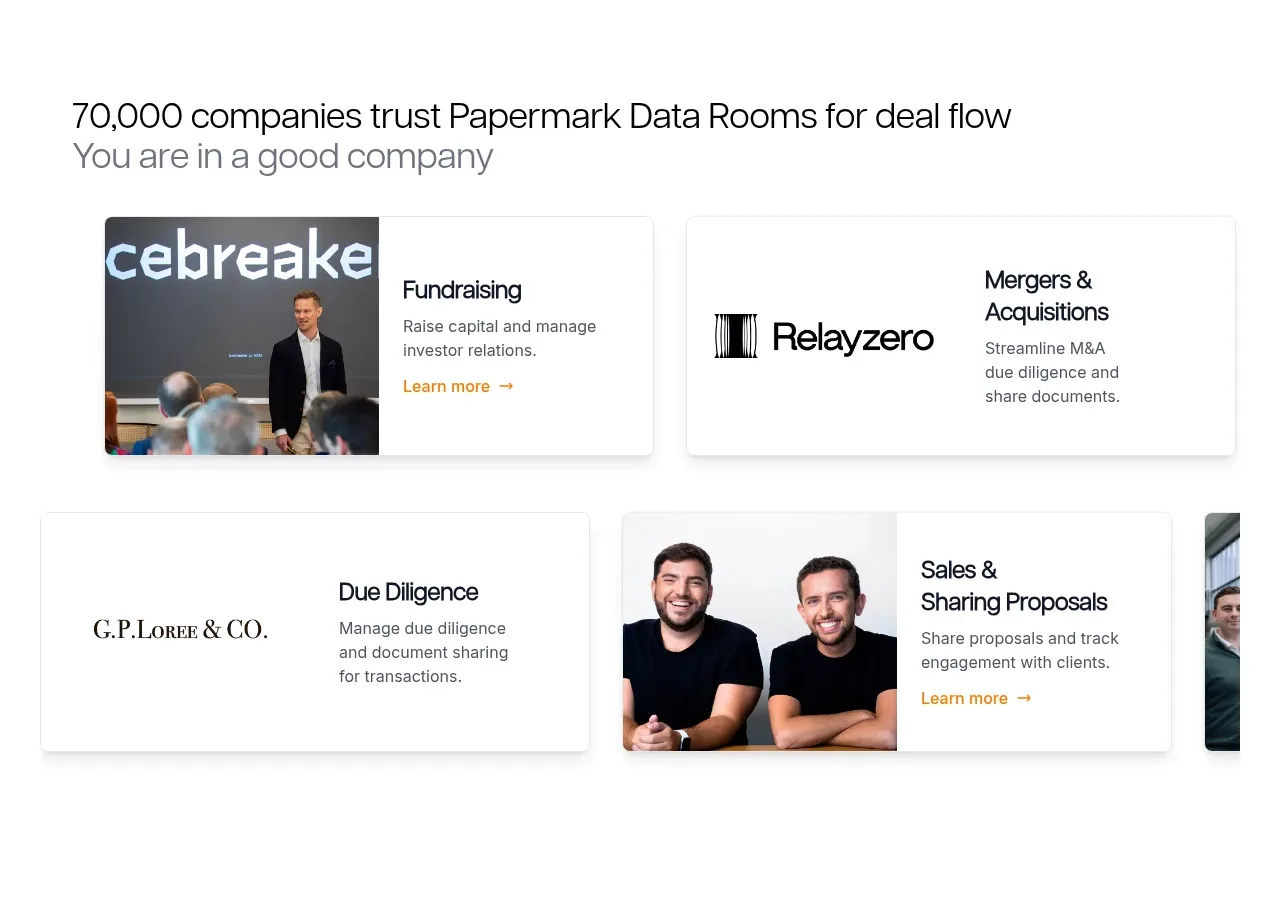
 Customer proof and use-case cards
Papermark Data Rooms · Logo cloud
Customer proof and use-case cards
Papermark Data Rooms · Logo cloud
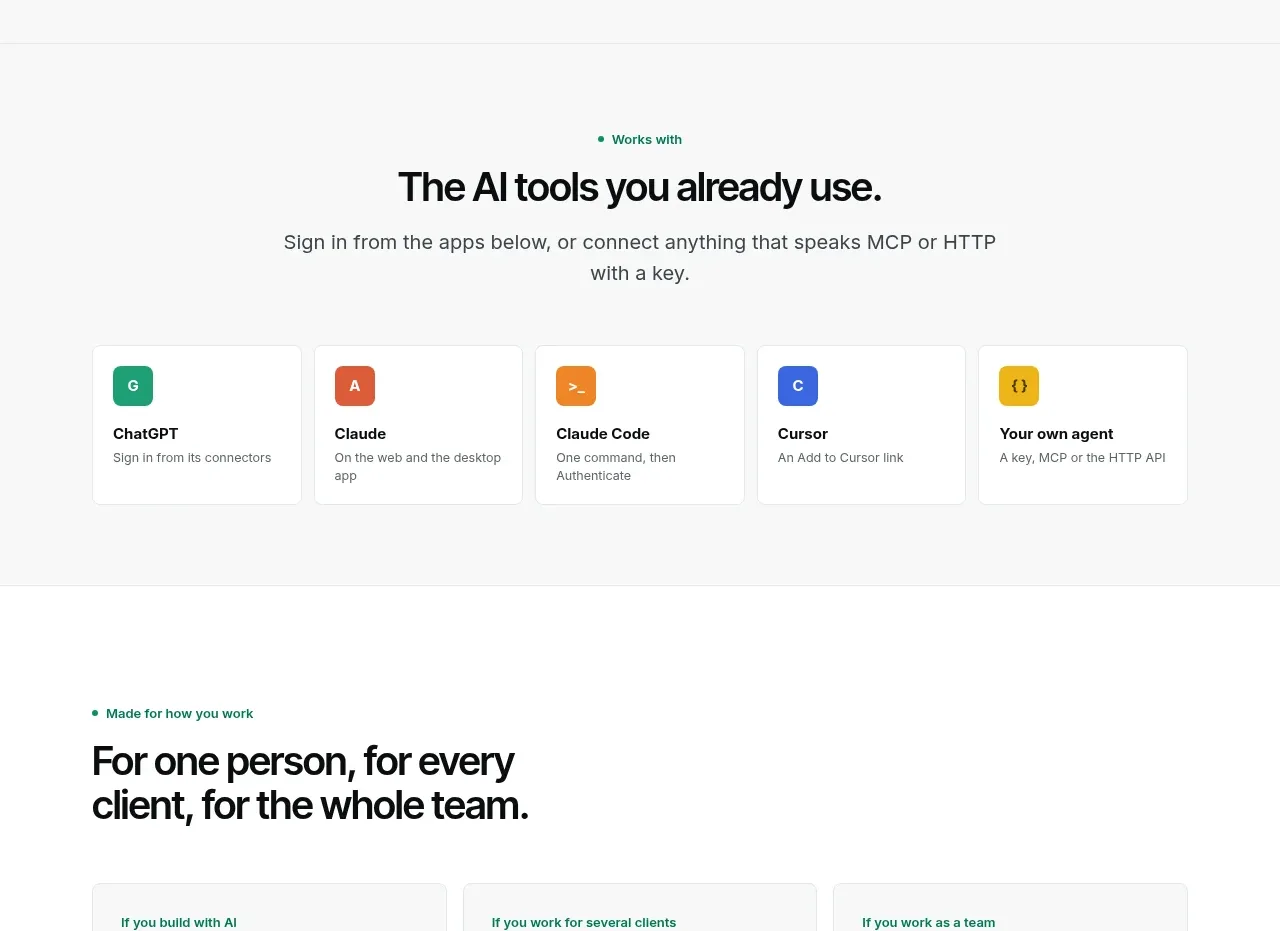
 Compatible tools grid
Context Engine · Logo cloud
Compatible tools grid
Context Engine · Logo cloud

M
AI model compatibility strip
MOVO AI · Logo cloud

 Customer logo strip
Inflight · Logo cloud
Customer logo strip
Inflight · Logo cloud
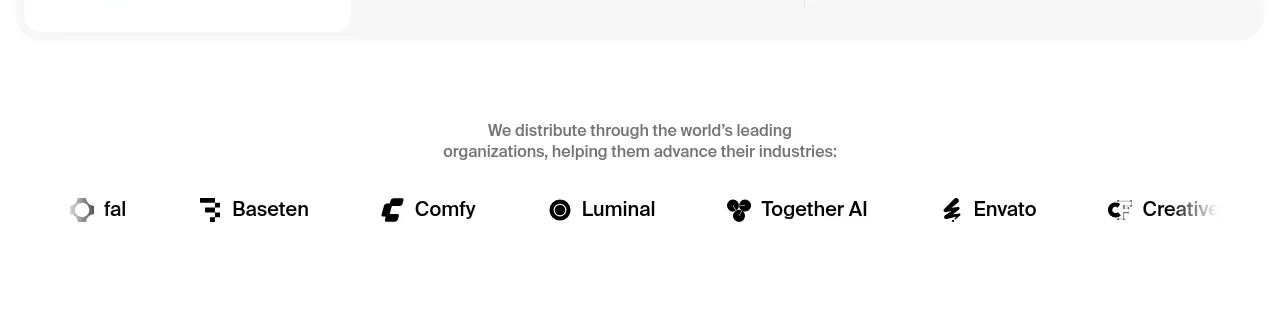
 Customer logo strip
Krea 3 · Logo cloud
Customer logo strip
Krea 3 · Logo cloud

 Trusted by professional teams
Inbox Zero · Logo cloud
Trusted by professional teams
Inbox Zero · Logo cloud