kage
kage
agibot.sh
Design analysis
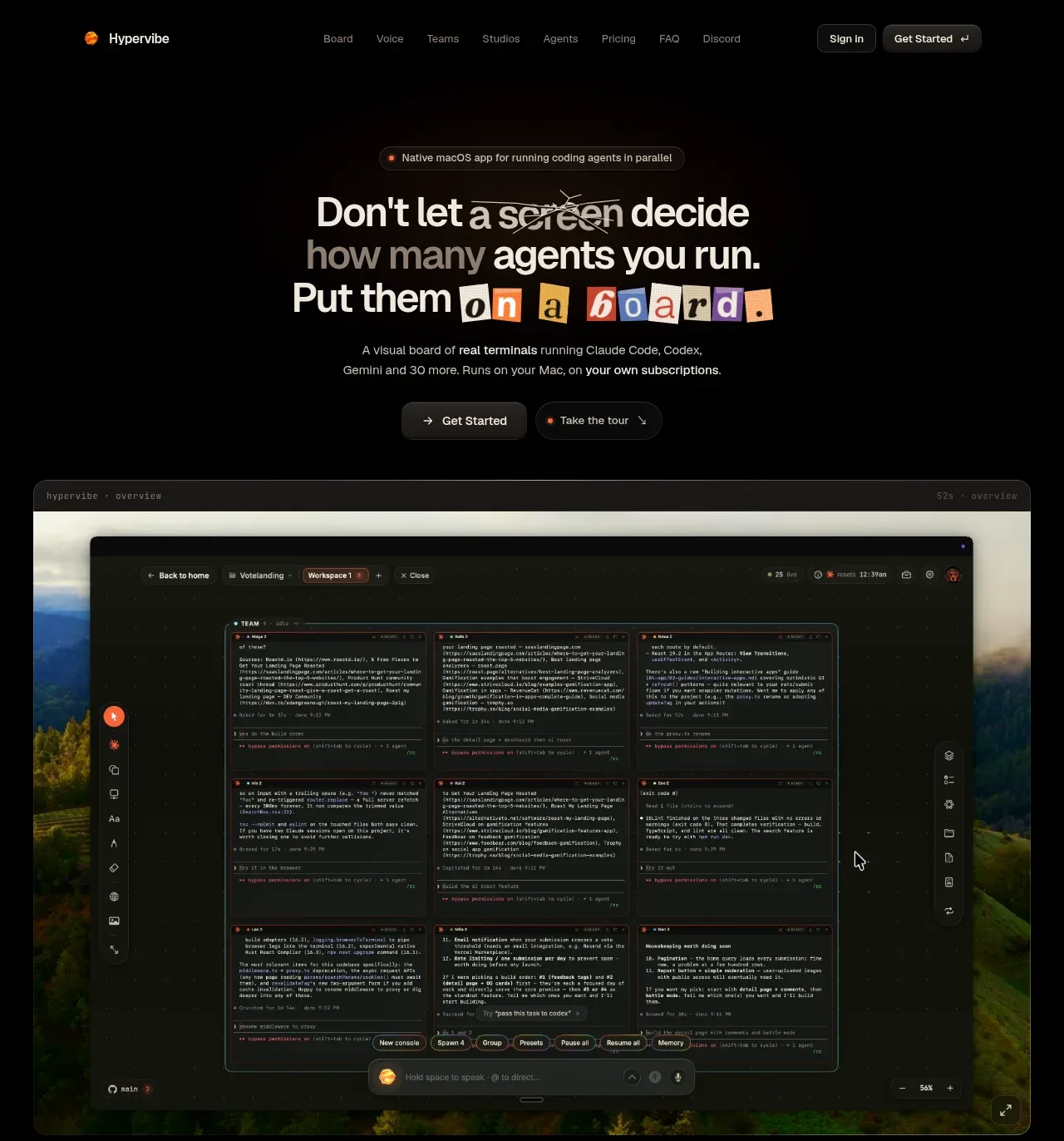
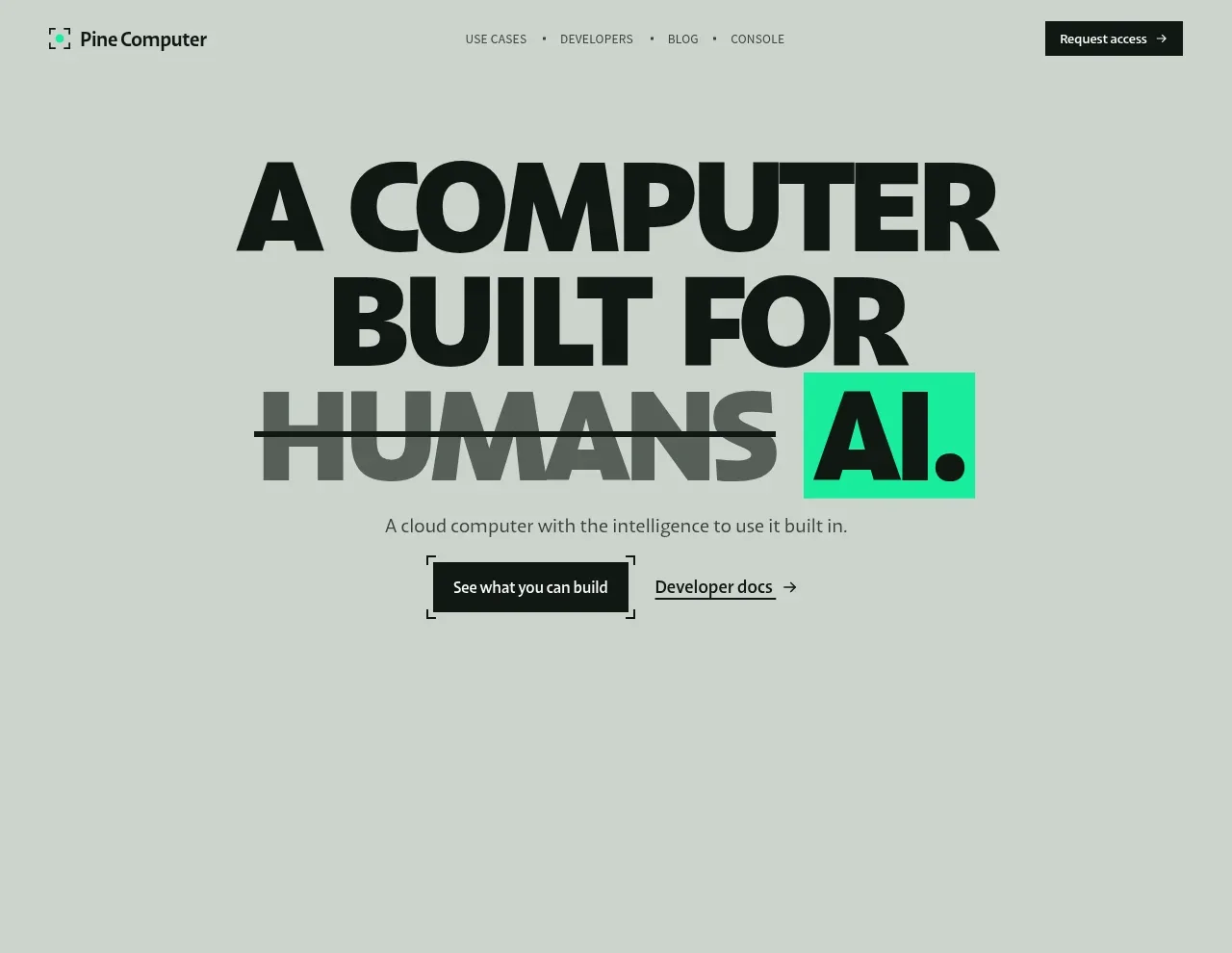
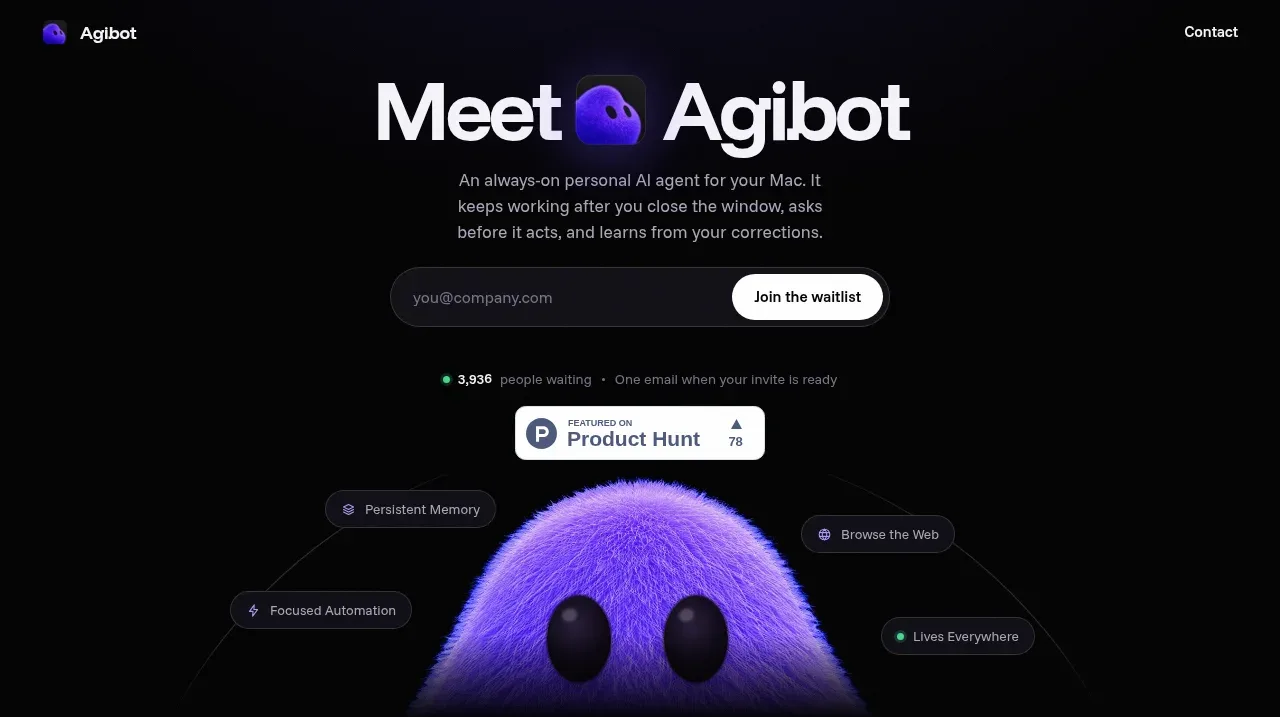
A centered product promise leads into an email waitlist form, proof-of-interest metadata, a Product Hunt badge, and a large glowing purple mascot visual with surrounding capability pills.
Prompt preview
## Reference images

Study these alongside the description below: hierarchy, rhythm, spacing, colour. Build for the product you are asked about, using this design language.

- Component: https://kage-design-assets.t3.tigrisfiles.io/components/agibot/caf89d58-757f-4493-9c2d-6456be940e33-1791784915-1.webp
- Full page it was cut from: https://kage-design-assets.t3.tigrisfiles.io/screenshots/agibot/caf89d58-757f-4493-9c2d-6456be940e33-1791784894236-full.webp
- Component on Kage: https://kage.design/component/agibot-hero

## Before you start
Ask what the user's product and brand are, then apply the following principles to that context rather than copying the reference.

Build a centered hero on a near-black #050506 background. Use a large, tightly tracked headline with a clear highlighted product element, followed by a concise two-to-three-line explanation in muted gray #aaa7b2. Place a pill-shaped email field and high-contrast submit button on one horizontal row, with a generous gap before lightweight social-proof text and an optional trust badge. Below, create a wide visual stage containing the product's own abstract focal asset; surround it with a few small floating capability labels connected by extremely subtle lines. Use white #f5f3f8, muted gray #9b98a4, violet accents around #7650ff and electric purple glow around #5526d9. Apply soft 18–24px radii, faint #24232b borders, restrained shadows, and ample vertical spacing. The form should have clear focus and hover states, remain stacked on mobile, and floating labels should reposition or hide responsively.

Never: use logos, product names, copy, illustrations, or imagery from the reference.