 kage
kage
betterment.com

Design analysis
A trust statement combines an oversized confidence statistic, recognition proof, and a family lifestyle image, followed by three concise credibility pillars.
Prompt preview
## Reference images

Study these alongside the description below: hierarchy, rhythm, spacing, colour. Build for the product you are asked about, using this design language.

- Component: https://kage-design-assets.t3.tigrisfiles.io/components/betterment-com/48b23e19-a777-4bc7-89e7-1aceabf18629-1789146558-6.webp
- Full page it was cut from: https://kage-design-assets.t3.tigrisfiles.io/screenshots/betterment-com/48b23e19-a777-4bc7-89e7-1aceabf18629-1789146502433-full.webp
- Component on Kage: https://kage.design/component/betterment-feature-grid-4

## Before you start
Ask what the user's product, audience, and brand are, then apply these principles to that product rather than copying the reference.

Create a trust section on a warm cream canvas. Start with a two-column proof block: a left editorial text area with a large serif trust statement, an oversized translucent statistic card, and a compact award/recognition treatment; pair it with a rounded lifestyle image on the right. Underneath, add three equal-width credibility pillars with small circular icons, bold headings, and brief explanatory text. Use dark navy (`#06165c`) for type, pale cream for the background, 24px radii on imagery/cards, and generous 72px vertical spacing. Keep proof claims visually distinct from marketing copy and make the image decorative with an alt description. Collapse to stacked content on mobile.

Never: use logos, product names, copy, illustrations, or imagery from the reference.
More components
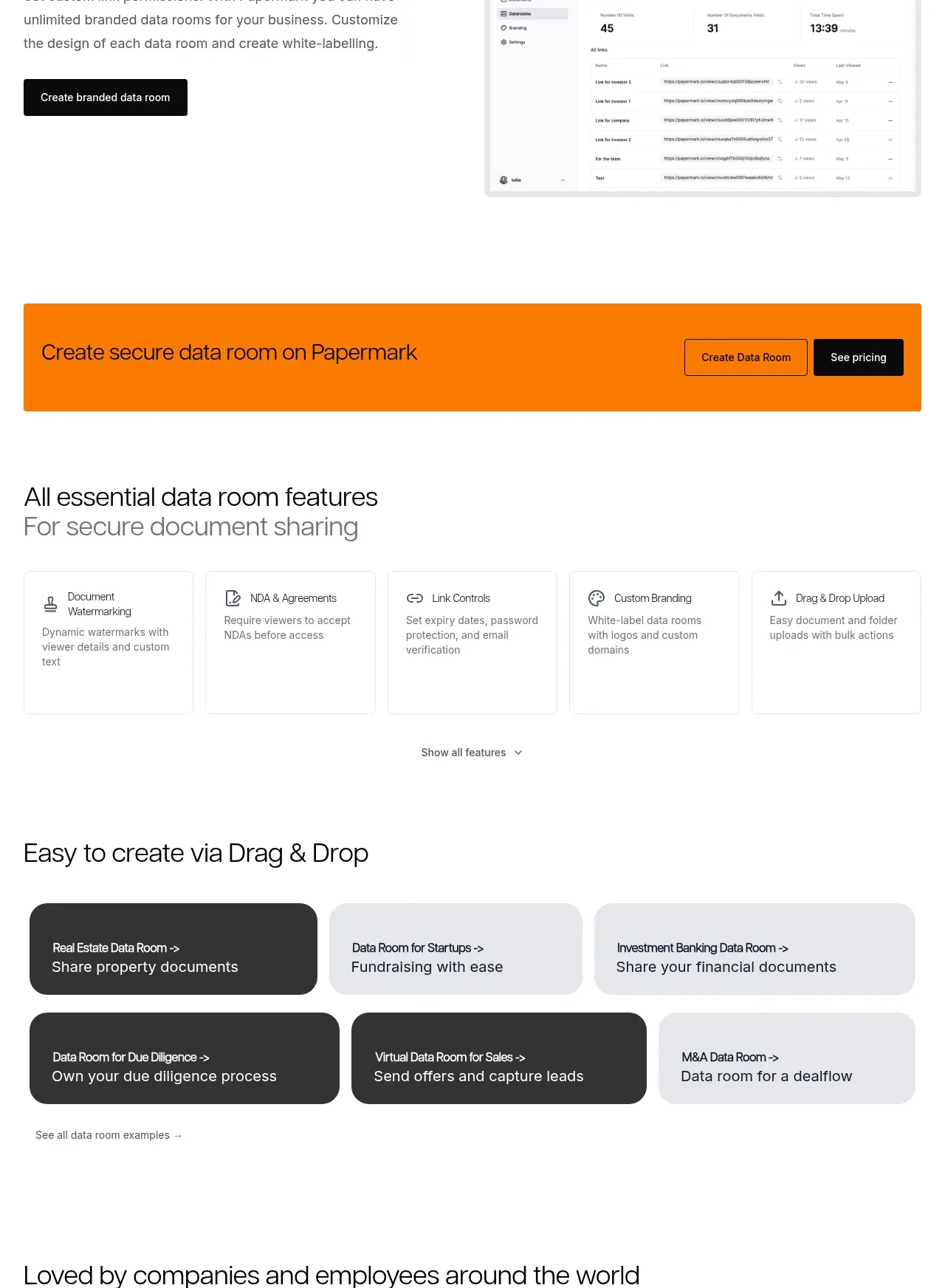
 Workflow demonstrations
Papermark Data Rooms · Feature grid
Workflow demonstrations
Papermark Data Rooms · Feature grid
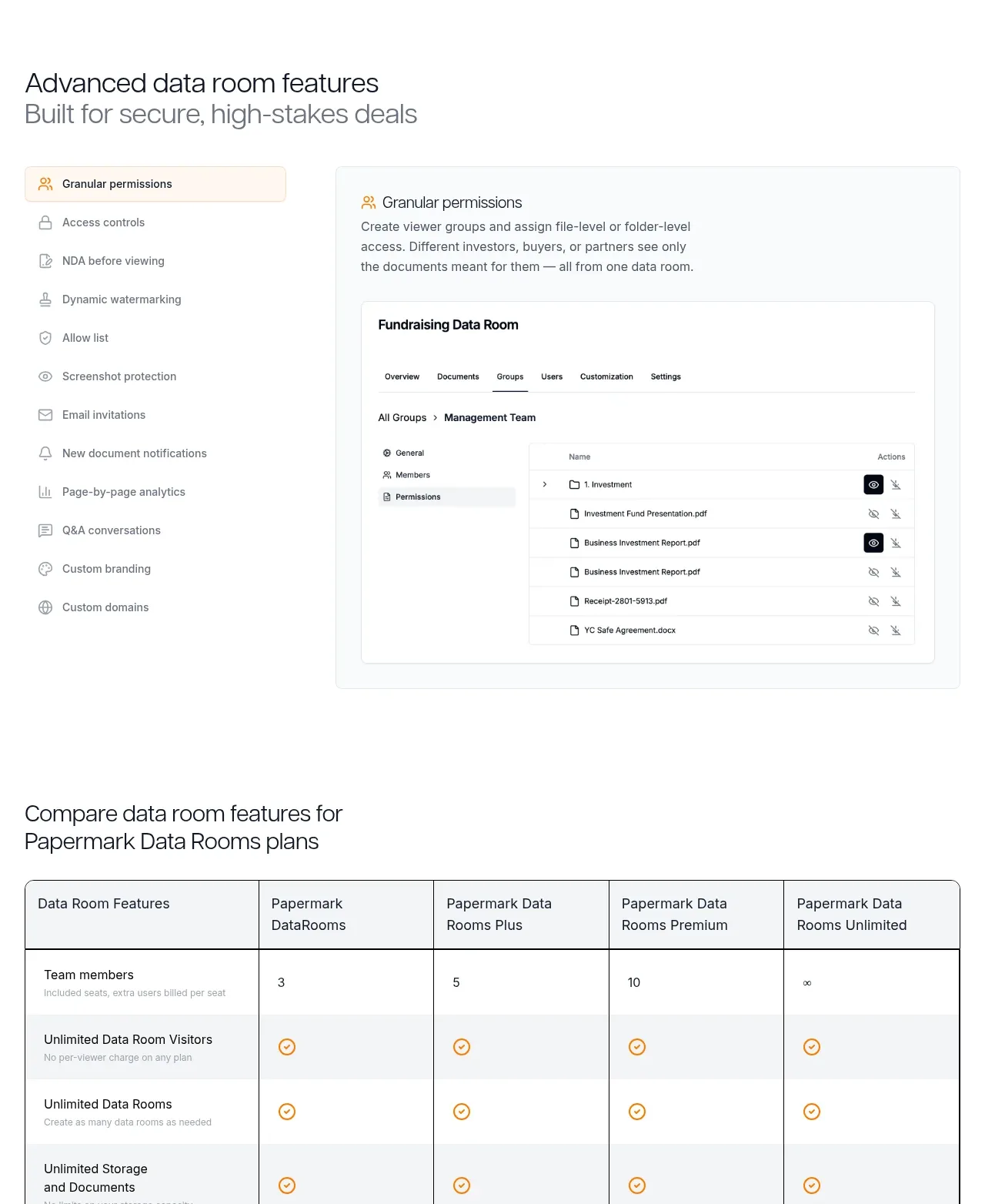 Advanced data-room features
Papermark Data Rooms · Feature grid
Advanced data-room features
Papermark Data Rooms · Feature grid
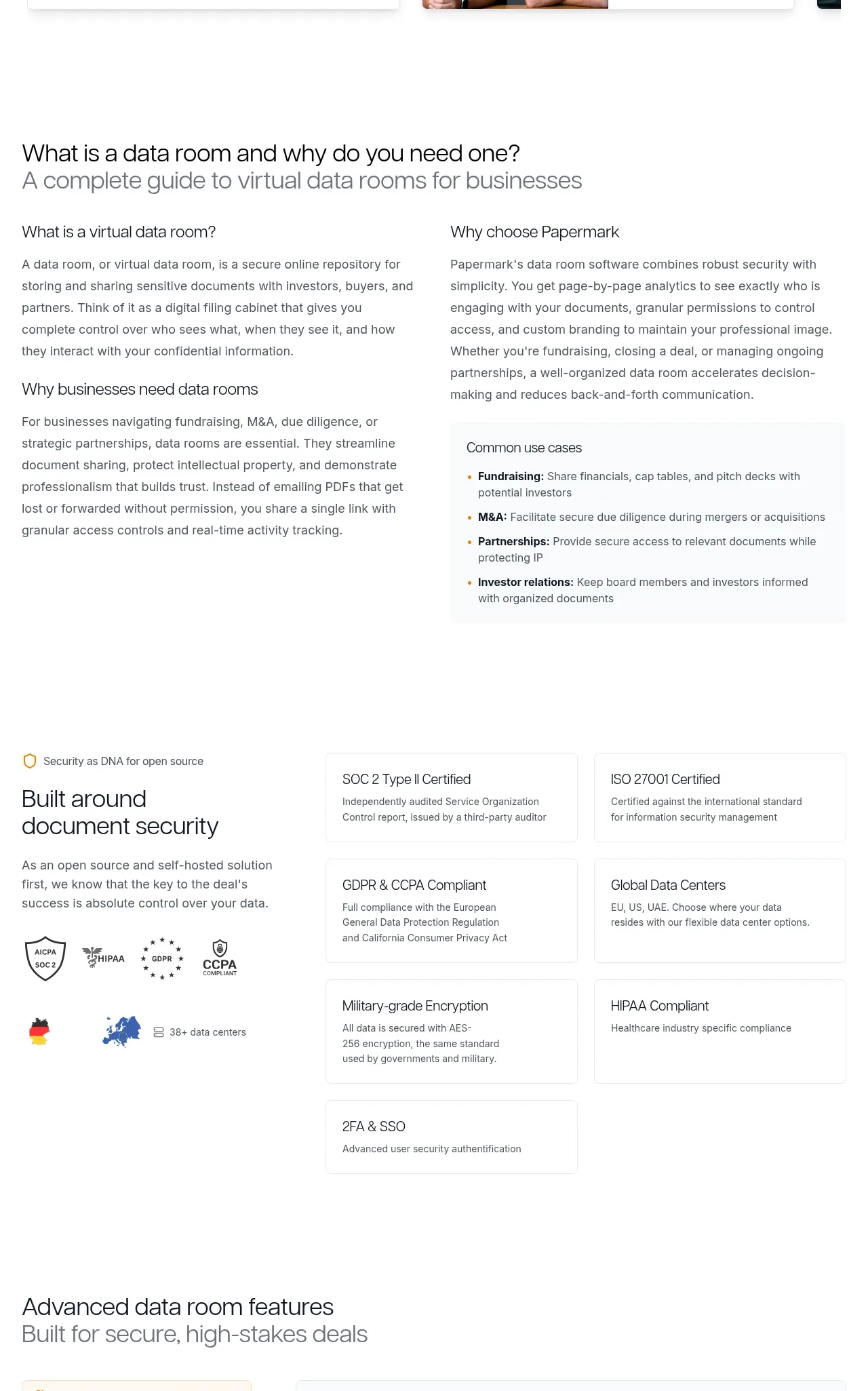 Data-room education and security overview
Papermark Data Rooms · Feature grid
Data-room education and security overview
Papermark Data Rooms · Feature grid
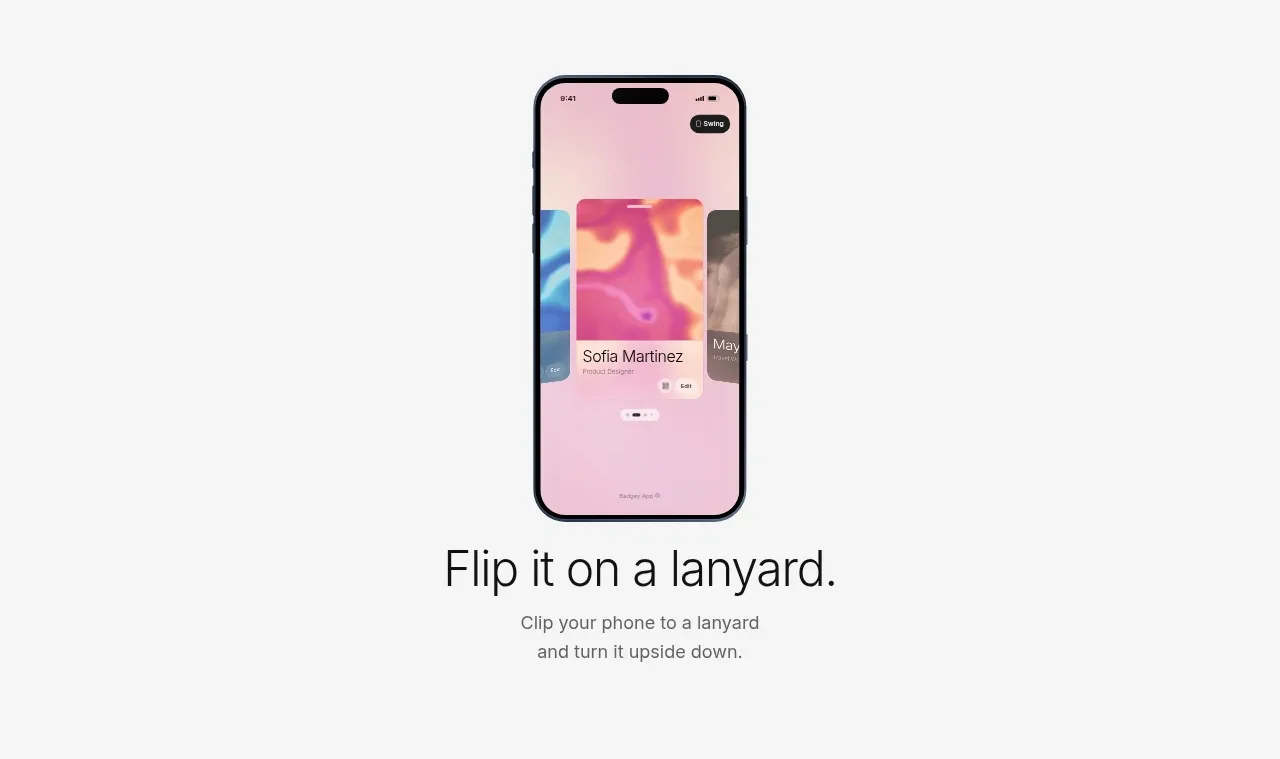
 Lanyard use-case feature
Badgey · Feature grid
Lanyard use-case feature
Badgey · Feature grid
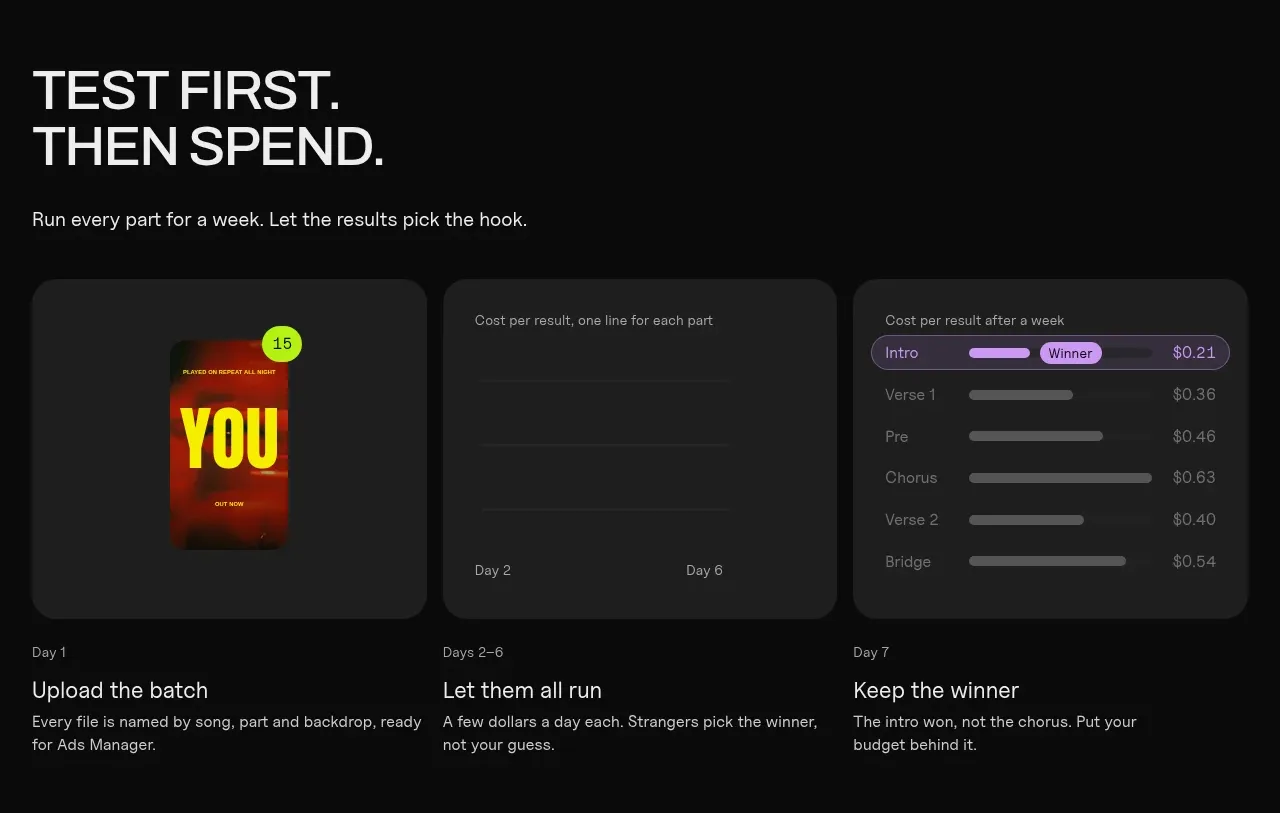
 Testing workflow
Clips by Plastic · Feature grid
Testing workflow
Clips by Plastic · Feature grid
 Four value propositions
Clips by Plastic · Feature grid
Four value propositions
Clips by Plastic · Feature grid