kage
kage
blenny.fi5h.xyz
Design analysis
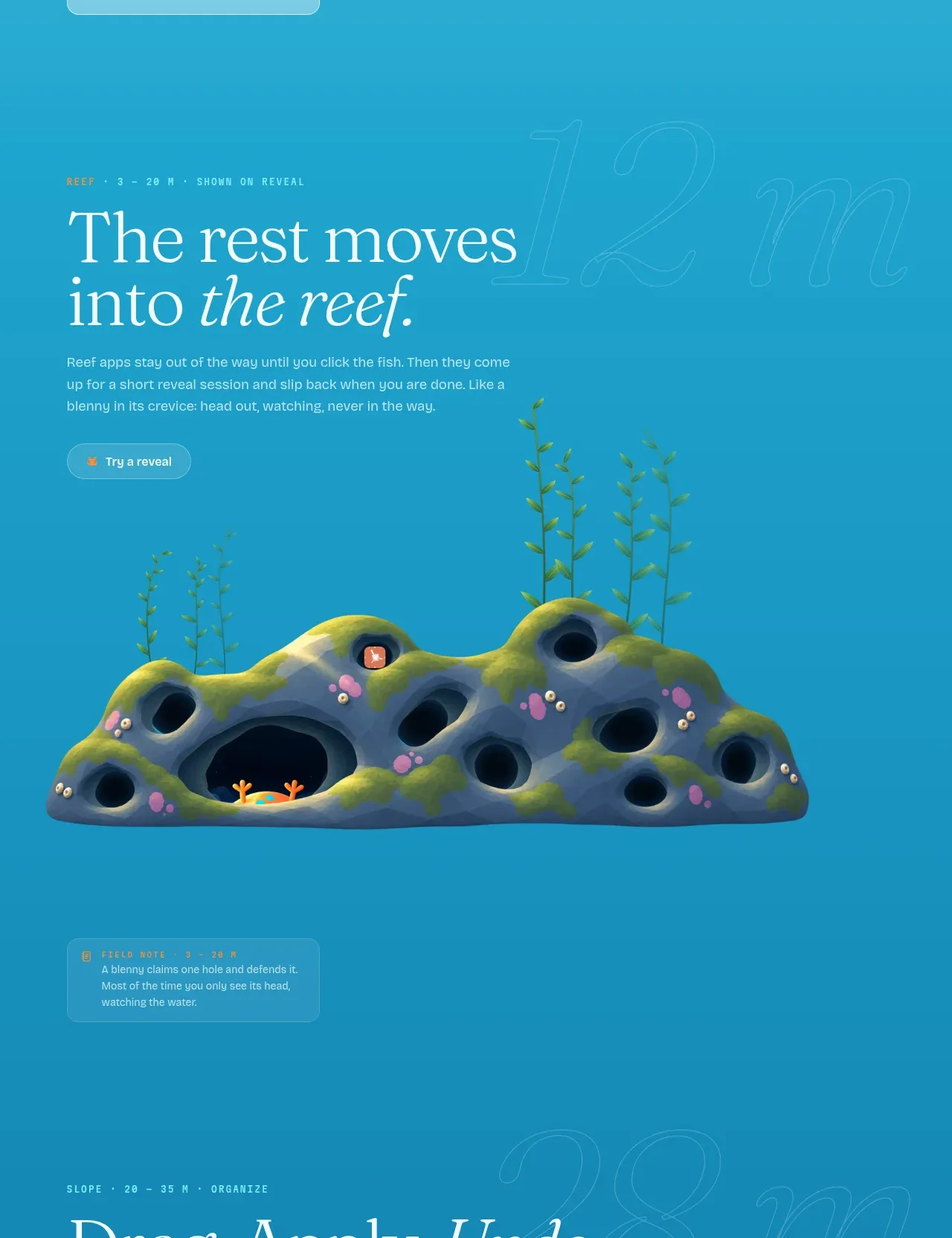
A second narrative section introduces a deferred/reveal mode, then gives the concept a large centered visual and a small explanatory note.
Prompt preview
## Reference images

Study these alongside the description below: hierarchy, rhythm, spacing, colour. Build for the product you are asked about, using this design language.

- Component: https://kage-design-assets.t3.tigrisfiles.io/components/blenny/33d02076-57e4-4143-93c3-5008f6d9015f-1791180360-2.webp
- Full page it was cut from: https://kage-design-assets.t3.tigrisfiles.io/screenshots/blenny/33d02076-57e4-4143-93c3-5008f6d9015f-1791180160992-full.webp
- Component on Kage: https://kage.design/component/blenny-gallery

## Before you start
Ask the user what their product is, who it is for, and what their brand voice and visual identity are. Apply the principles below to that product rather than reproducing this reference.

Design a narrative visual section for a secondary product mode. Start with an eyebrow and large editorial heading, followed by a compact paragraph and one soft-outline action. Below it, reserve a generous stage for a large centered product illustration, screenshot, or abstract visualization that may animate into view on scroll. Add a small translucent explanatory card after the visual. Use a saturated blue background around #159bc0, light cream text #f3f6e8, and muted aqua borders. Keep the visual dominant but isolated with plenty of negative space. Make the action pill-shaped, and if interaction is visible, support a click or scroll-triggered reveal with reduced-motion fallback. Use responsive max-widths rather than fixed positioning.

Never use logos, product names, copy, illustrations, or imagery from the reference.