 kage
kage
lleverage.ai
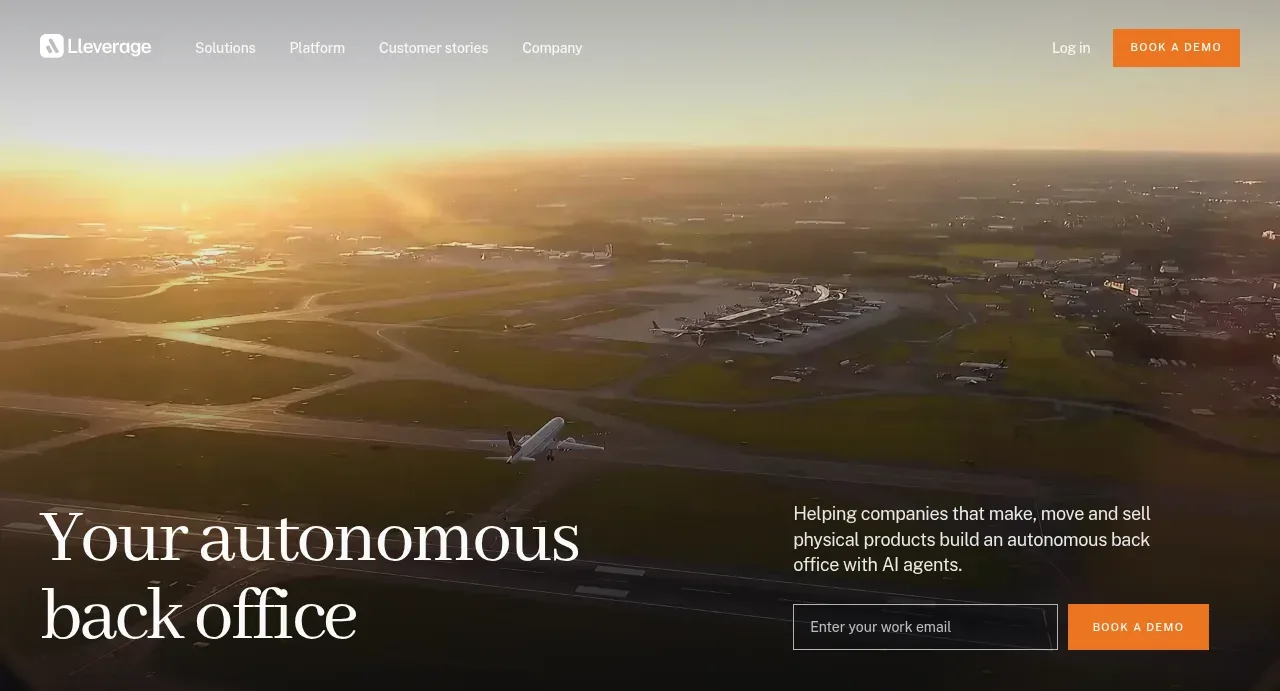
Design analysis
The hero combines a cinematic industrial background, an oversized editorial headline, concise supporting copy, and an inline email/demo action.
Prompt preview
## Reference images

Study these alongside the description below: hierarchy, rhythm, spacing, colour. Build for the product you are asked about, using this design language.

- Component: https://kage-design-assets.t3.tigrisfiles.io/components/lleverage/862048bd-3dd3-4c2e-9d3c-aadeb65c3eec-1792130577-1.webp
- Full page it was cut from: https://kage-design-assets.t3.tigrisfiles.io/screenshots/lleverage/862048bd-3dd3-4c2e-9d3c-aadeb65c3eec-1792130486253-full.webp
- Component on Kage: https://kage.design/component/lleverage-hero

## Before you start
Ask what the user's product is, what outcome it creates, and what brand personality it should express. Then adapt this structure to that product.

Create a full-width hero directly beneath navigation with a cinematic product-relevant background video or image. Add a strong dark gradient from transparent top to near-black bottom (#080B0D) so text remains readable. Use a two-column lower composition: an oversized high-contrast serif or display headline on the left, and short sans-serif supporting copy plus an email field and primary CTA on the right. Let the headline use large responsive type, roughly 52–72px desktop with tight line-height; supporting copy should be 14–16px and limited to 2–4 lines. Give the hero generous vertical breathing room and make the first action obvious. Include a subtle hover/focus treatment on the field and CTA, and provide a mobile stacking layout.

Never: use the reference's logos, product names, copy, illustrations, imagery, or exact headline.
More components
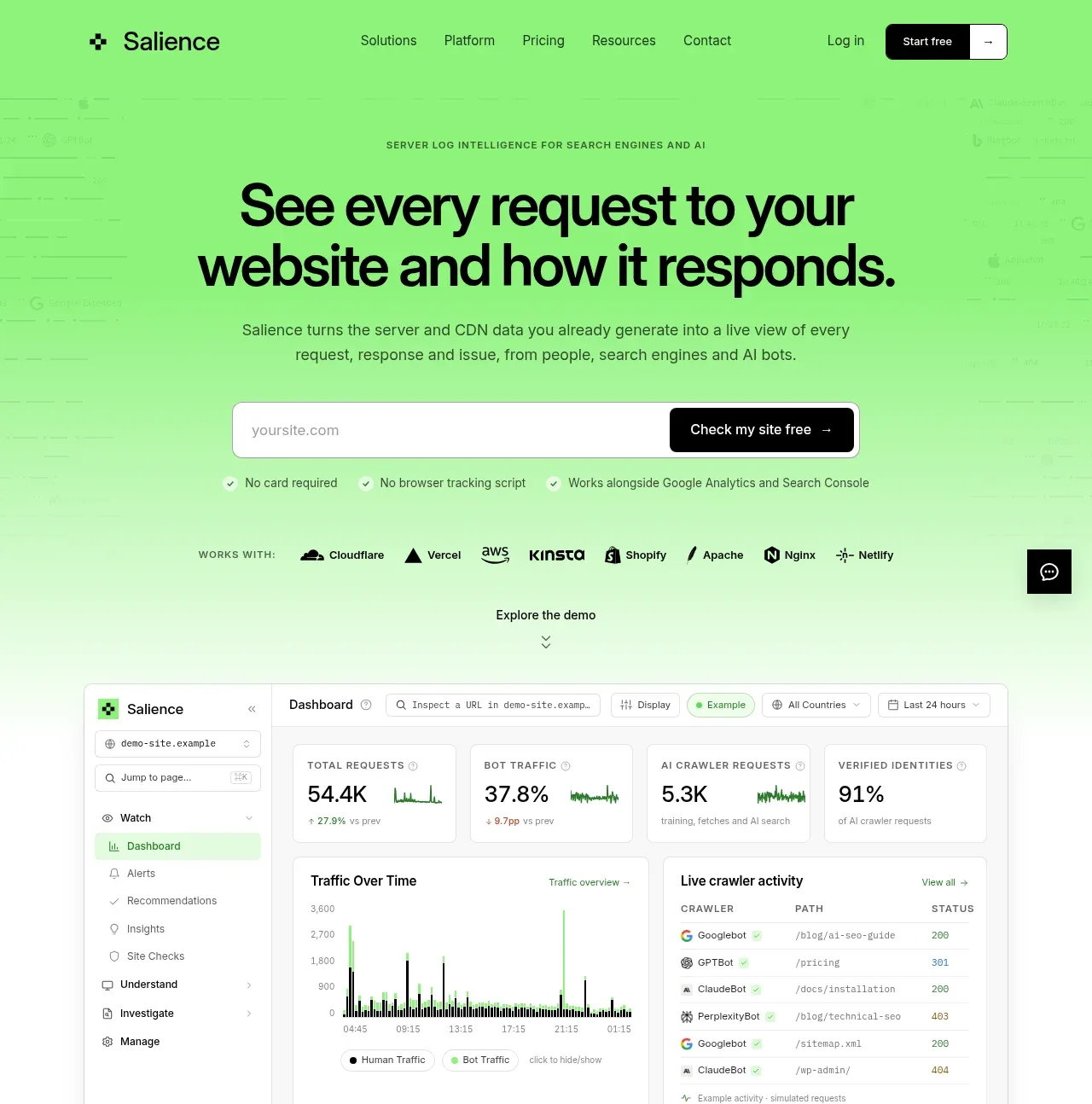
 Product promise and site checker hero
Salience · Hero
Product promise and site checker hero
Salience · Hero
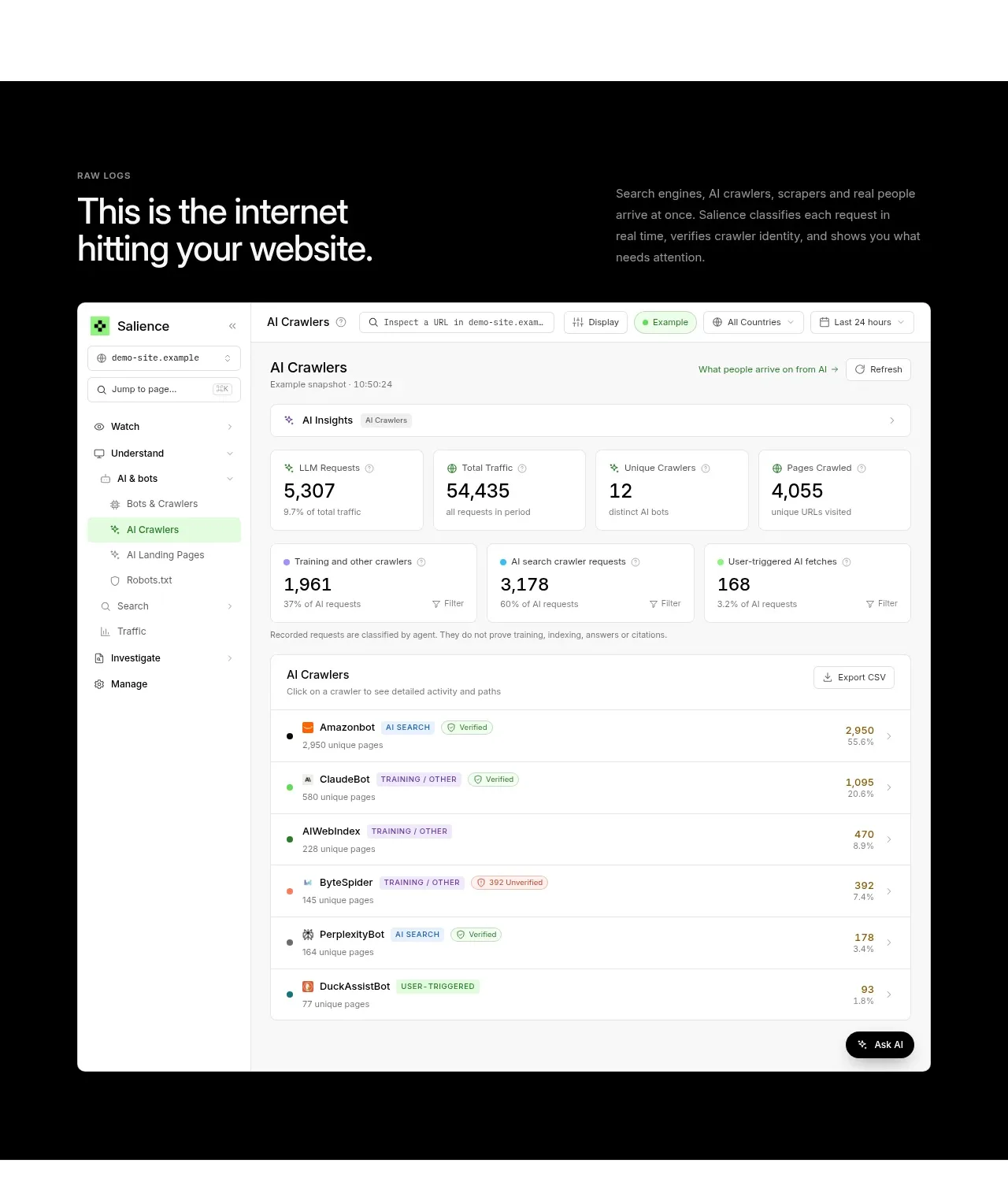 Raw activity dashboard showcase
Salience · Hero
Raw activity dashboard showcase
Salience · Hero
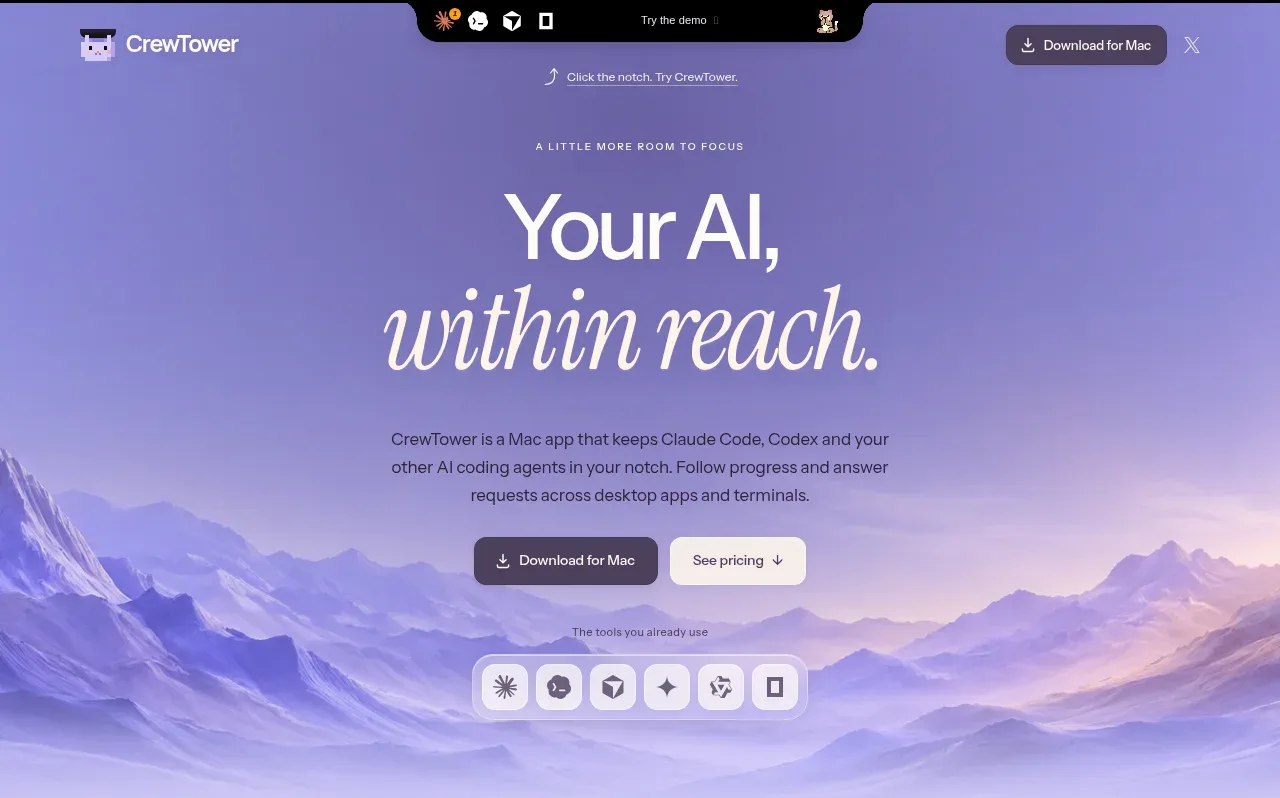
 Focus-oriented hero
CrewTower Mod for Claude Code · Hero
Focus-oriented hero
CrewTower Mod for Claude Code · Hero
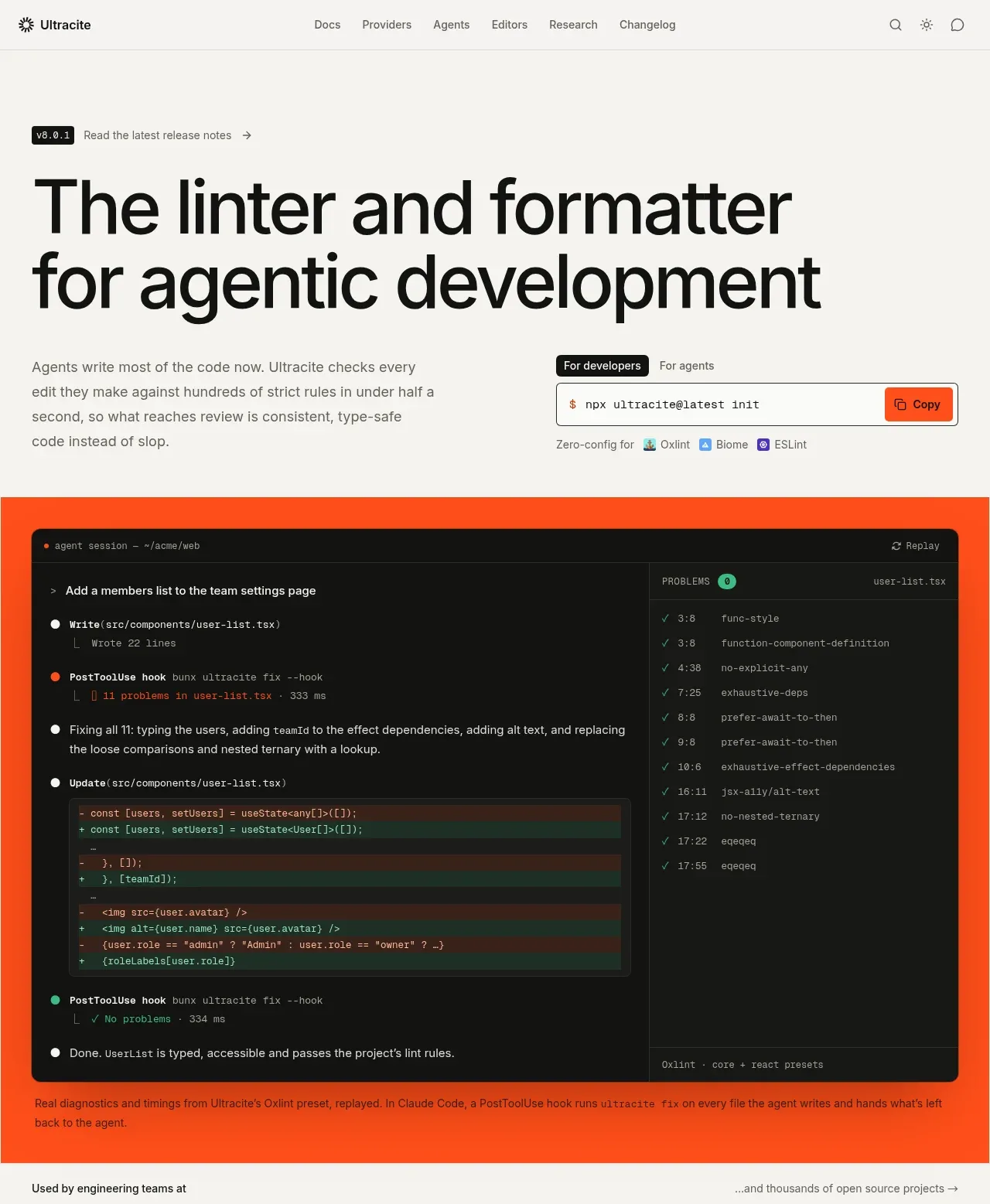
 Agentic development hero with live terminal preview
Ultracite v8 · Hero
Agentic development hero with live terminal preview
Ultracite v8 · Hero
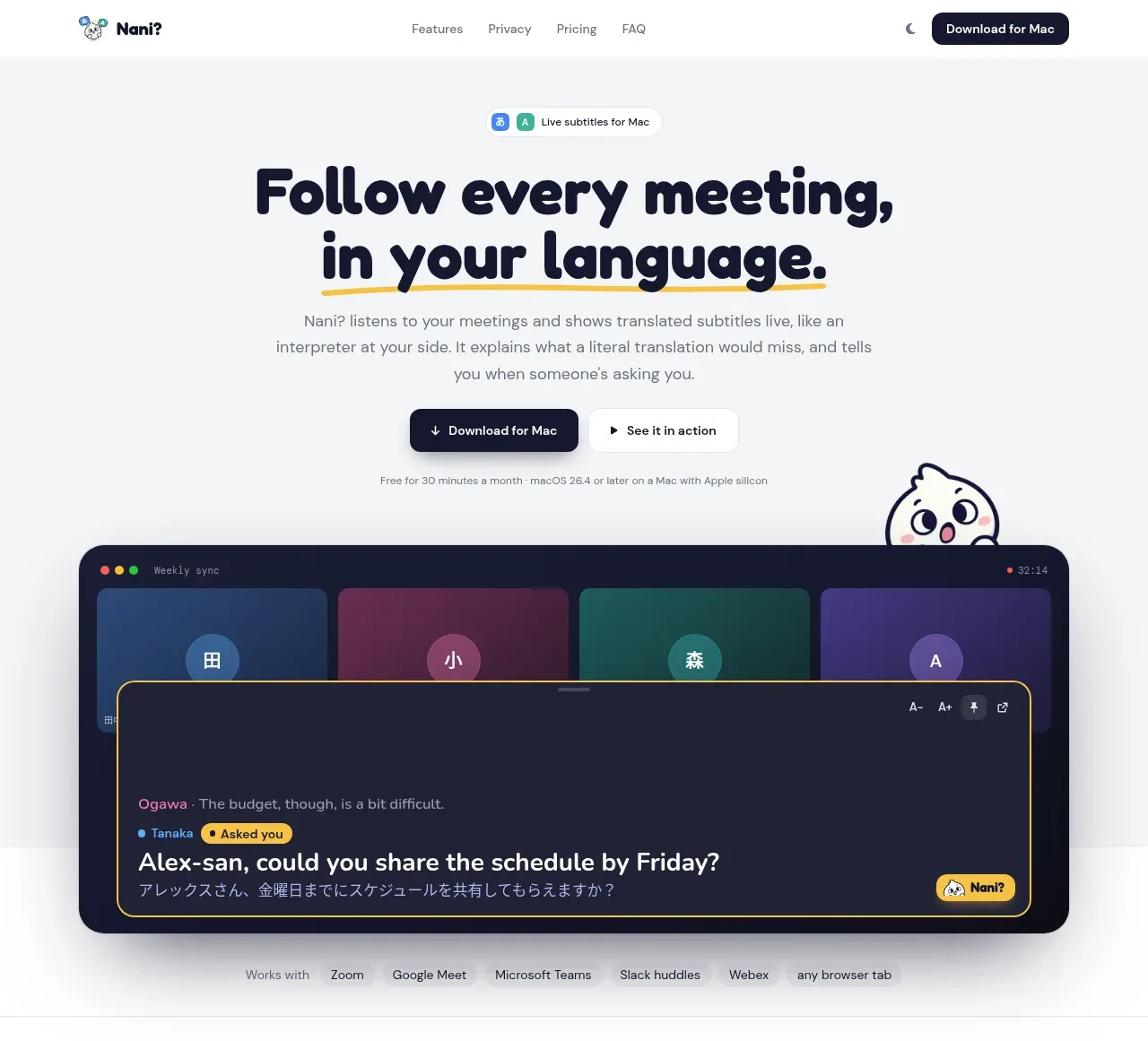
 Translation meeting hero
NANI??? · Hero
Translation meeting hero
NANI??? · Hero
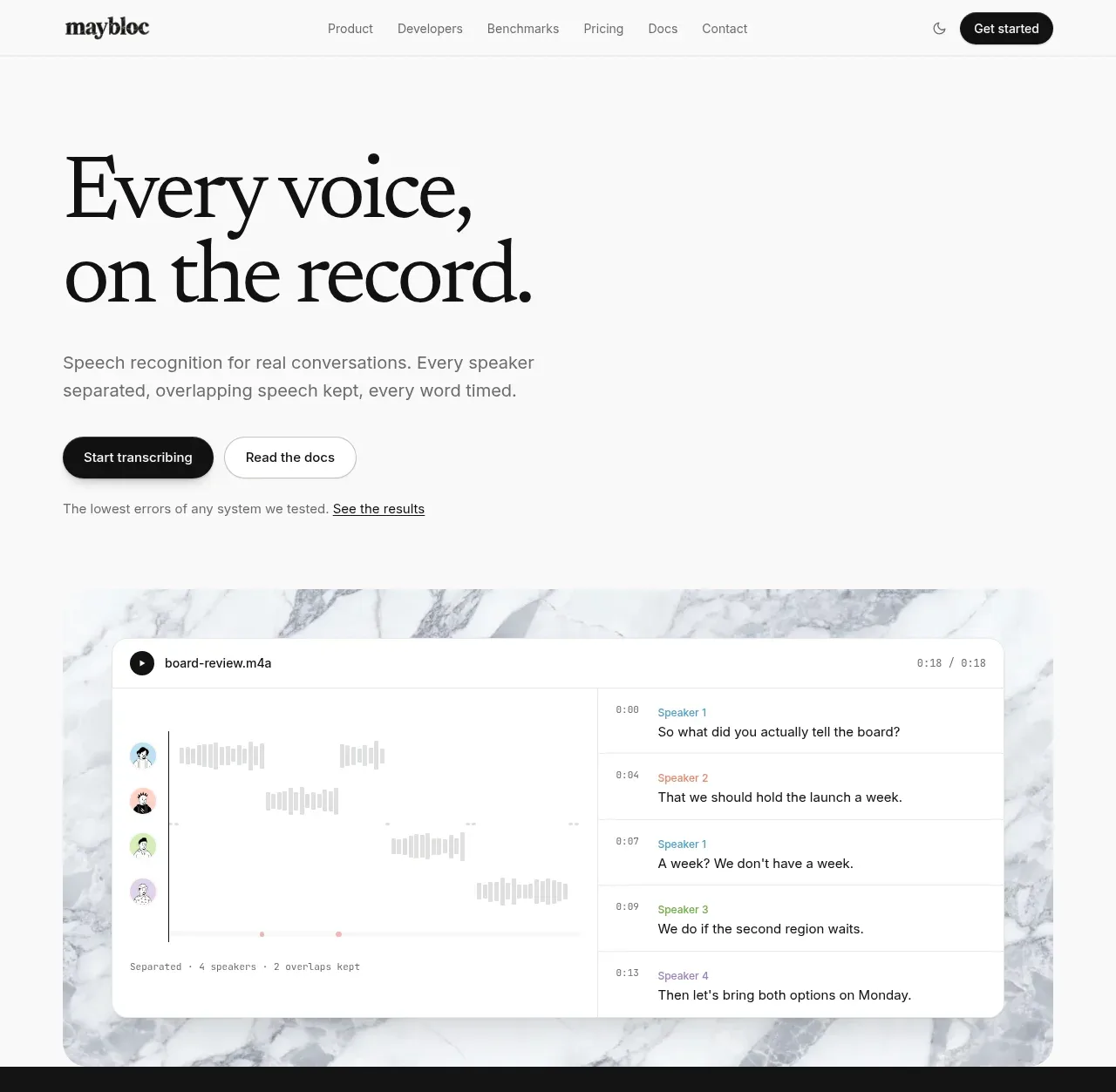
 Editorial speech transcription hero
Maybloc · Hero
Editorial speech transcription hero
Maybloc · Hero