kage
kage
rtrvr.ai

Design analysis
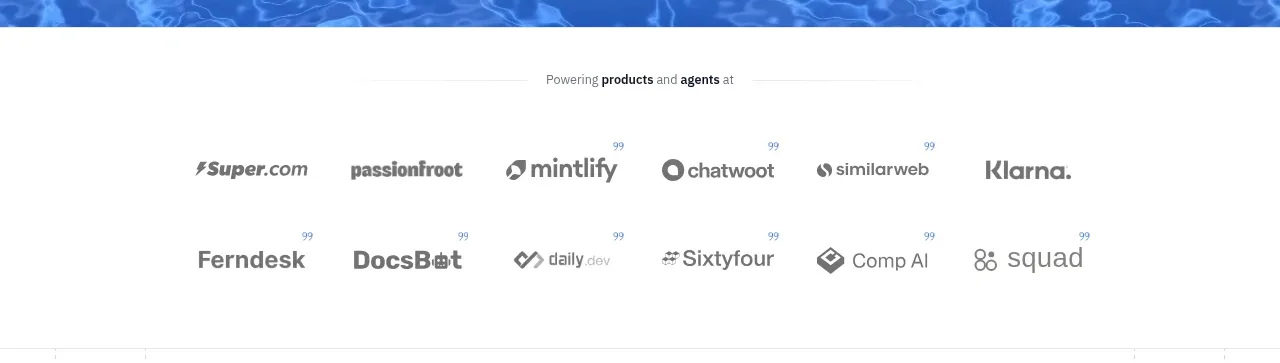
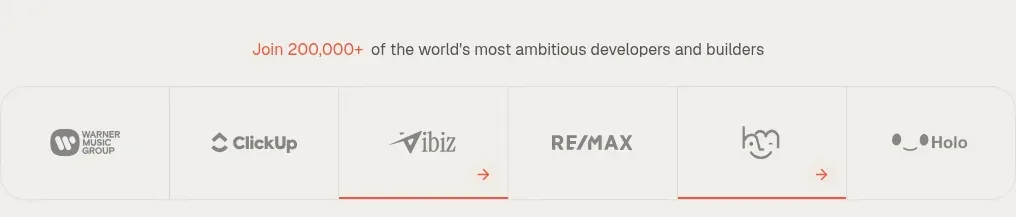
A small section label and bold trust headline establish credibility before a single horizontal row of varied customer marks creates quick visual proof.
Prompt preview
## Reference images

Study these alongside the description below: hierarchy, rhythm, spacing, colour. Build for the product you are asked about, using this design language.

- Component: https://kage-design-assets.t3.tigrisfiles.io/components/retriever-ai/4363ca9a-43f9-447c-8e7d-56b17f2dfed5-1792044245-2.webp
- Full page it was cut from: https://kage-design-assets.t3.tigrisfiles.io/screenshots/retriever-ai/4363ca9a-43f9-447c-8e7d-56b17f2dfed5-1792044106345-full.webp
- Component on Kage: https://kage.design/component/retriever-logo-cloud

## Before you start
Ask which customer, partner, or community proof is credible for the user's product and whether logos may be shown. Adapt this pattern with permissioned, original assets.

Create a centered trust section with a tiny letter-spaced eyebrow, a strong one-line headline, and a horizontally distributed logo cloud below it. Use grayscale or restrained brand colors so the logos support rather than compete with the headline. Normalize logo heights, align them optically rather than mechanically, and allow wrapping or horizontal scrolling on smaller screens.

Design language: use warm ivory #f4f1e8, black #171715, and a subdued gray-green #718078 for secondary marks. Headline typography should be 30–34px, bold and tightly tracked; the eyebrow 9–10px uppercase with generous letter spacing. Give the section 64px top and bottom padding, 32–48px between heading and marks, and 28–44px between marks. Avoid cards and heavy borders; the trust should feel editorial and calm.

Never: copy logos, product names, copy, illustrations, or imagery from the reference.