kage
kage
elyx.design
Design analysis
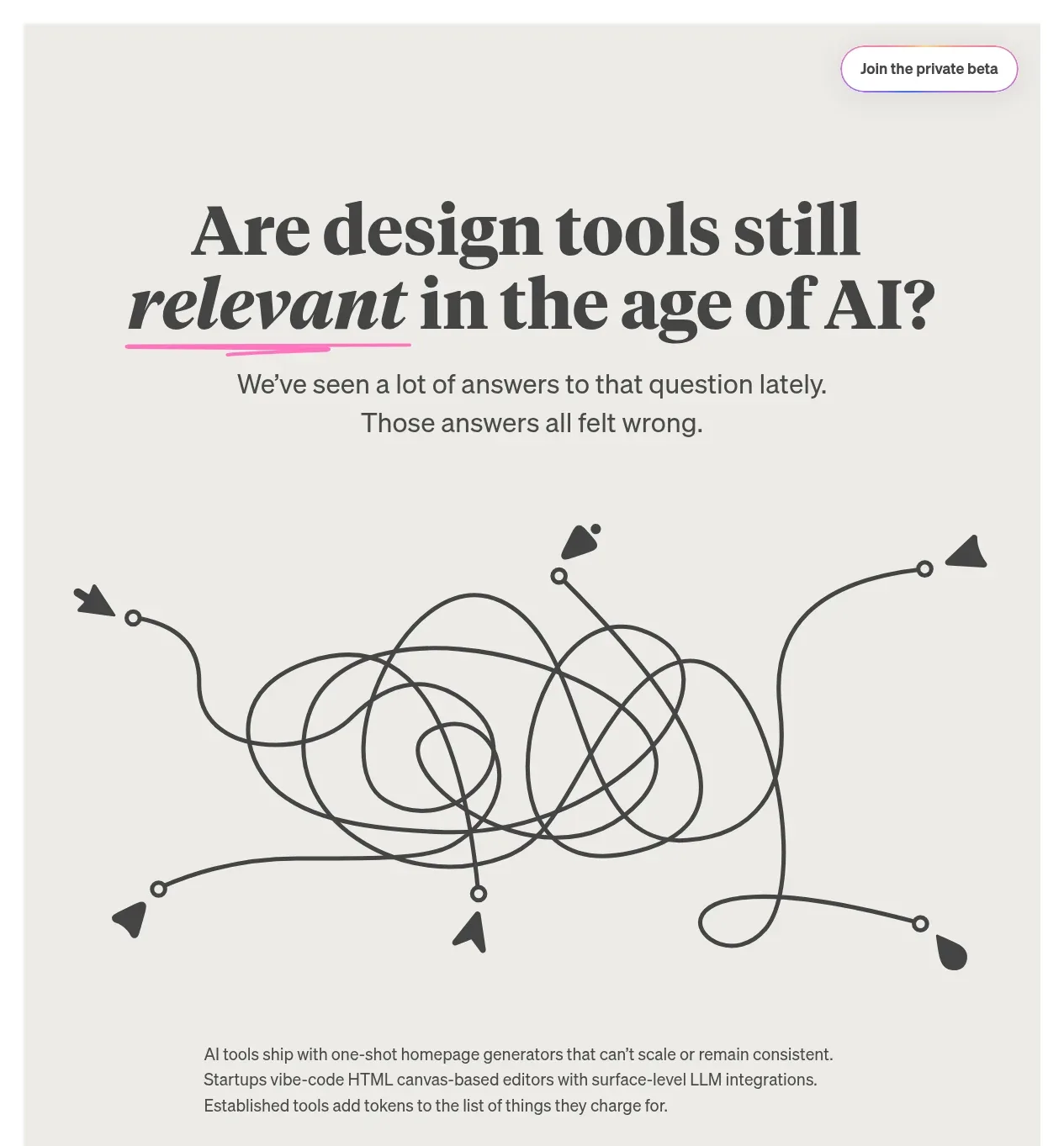
The hero combines a large serif question, centered supporting copy, and an oversized abstract line diagram that creates motion without becoming a conventional product screenshot.
Prompt preview
## Reference images

Study these alongside the description below: hierarchy, rhythm, spacing, colour. Build for the product you are asked about, using this design language.

- Component: https://kage-design-assets.t3.tigrisfiles.io/components/elyx-design/634f2ca9-e930-42fa-918f-46bd7d94fb82-1789563433-1.webp
- Full page it was cut from: https://kage-design-assets.t3.tigrisfiles.io/screenshots/elyx-design/634f2ca9-e930-42fa-918f-46bd7d94fb82-1789563404568-full.webp
- Component on Kage: https://kage.design/component/elyx-hero

## Before you start
Ask what the user's product is, what problem it solves, and which brand traits should shape the visual language. Then adapt this hero system to those answers.

Create a tall, centered hero on a warm paper background (`#eeece8`). Start with an oversized editorial serif headline, approximately 64–78px on desktop with tight leading around 0.92, and use italic serif emphasis for one phrase. Add a thin hand-drawn underline in a saturated pink (`#ef5c9b`) beneath the emphasized phrase. Place two short centered lines of supporting sans-serif copy below, using `#3d3d3a` at 22–25px. Beneath the copy, create a large abstract generative line drawing: thin charcoal curves, loops, open circles, and arrow-like shapes, with plenty of negative space. It should feel like a visual metaphor rather than a literal illustration. Keep the content in a max-width around 760px, but let the drawing spread wider. Use large vertical spacing and responsive scaling; on mobile reduce headline size and simplify the drawing. Avoid a conventional hero image or card.

Never: use logos, product names, copy, illustrations, or imagery from the reference.