kage
kage
helohq.com
Design analysis
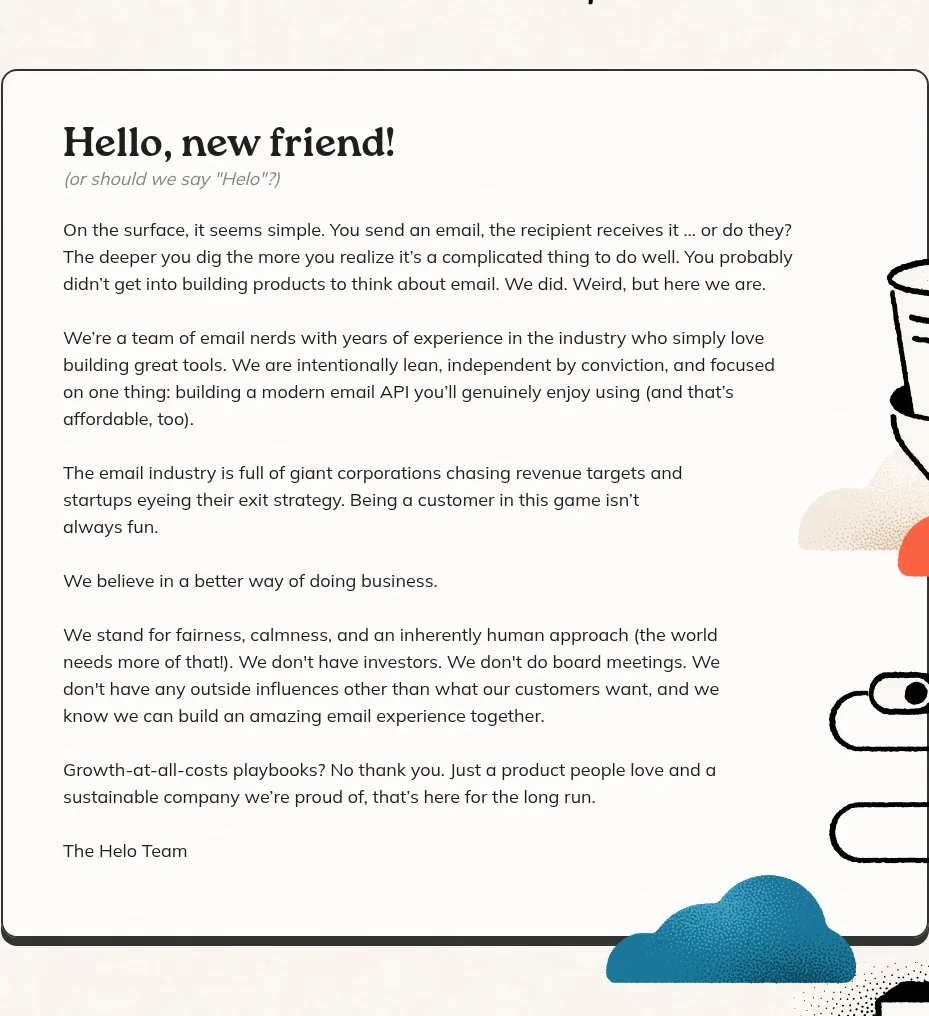
A large outlined content card introduces the company through several short paragraphs, while an oversized decorative illustration overlaps its right and lower edges.
Prompt preview
## Reference images

Study these alongside the description below: hierarchy, rhythm, spacing, colour. Build for the product you are asked about, using this design language.

- Component: https://kage-design-assets.t3.tigrisfiles.io/components/helo/c47b31ce-de8b-413b-ab53-bd3bf69ea219-1790921005-2.webp
- Full page it was cut from: https://kage-design-assets.t3.tigrisfiles.io/screenshots/helo/c47b31ce-de8b-413b-ab53-bd3bf69ea219-1790920903911-full.webp
- Component on Kage: https://kage.design/component/helo-card

## Before you start
Ask what the user's company believes, what story it needs to tell, and which brand traits should guide the visual language. Then build an original about section using these principles.

Create a wide editorial about panel on an ivory background, set inside a rounded rectangle with a thin near-black outline and a substantial dark offset shadow. Use a two-column-feeling composition: readable text occupies the left and center with a large serif heading, a small italic aside, and multiple short paragraphs separated by generous spacing; an expressive abstract illustration can overlap the right edge and extend below the panel.

Use a near-black serif display heading around 30–38px, body copy around 15–17px with 1.5 line-height, and muted gray for secondary text. Keep the panel radius around 14px, border about 2px, and shadow offset around 0 7px #303331. Maintain an ivory #faf7f2 canvas and use a restrained coral, teal, blue, and yellow palette for the decorative art. On narrow screens, place the illustration below or beside the text without obscuring content.

Never: copy logos, product names, copy, illustrations, or imagery from the reference.