 kage
movoai.pro
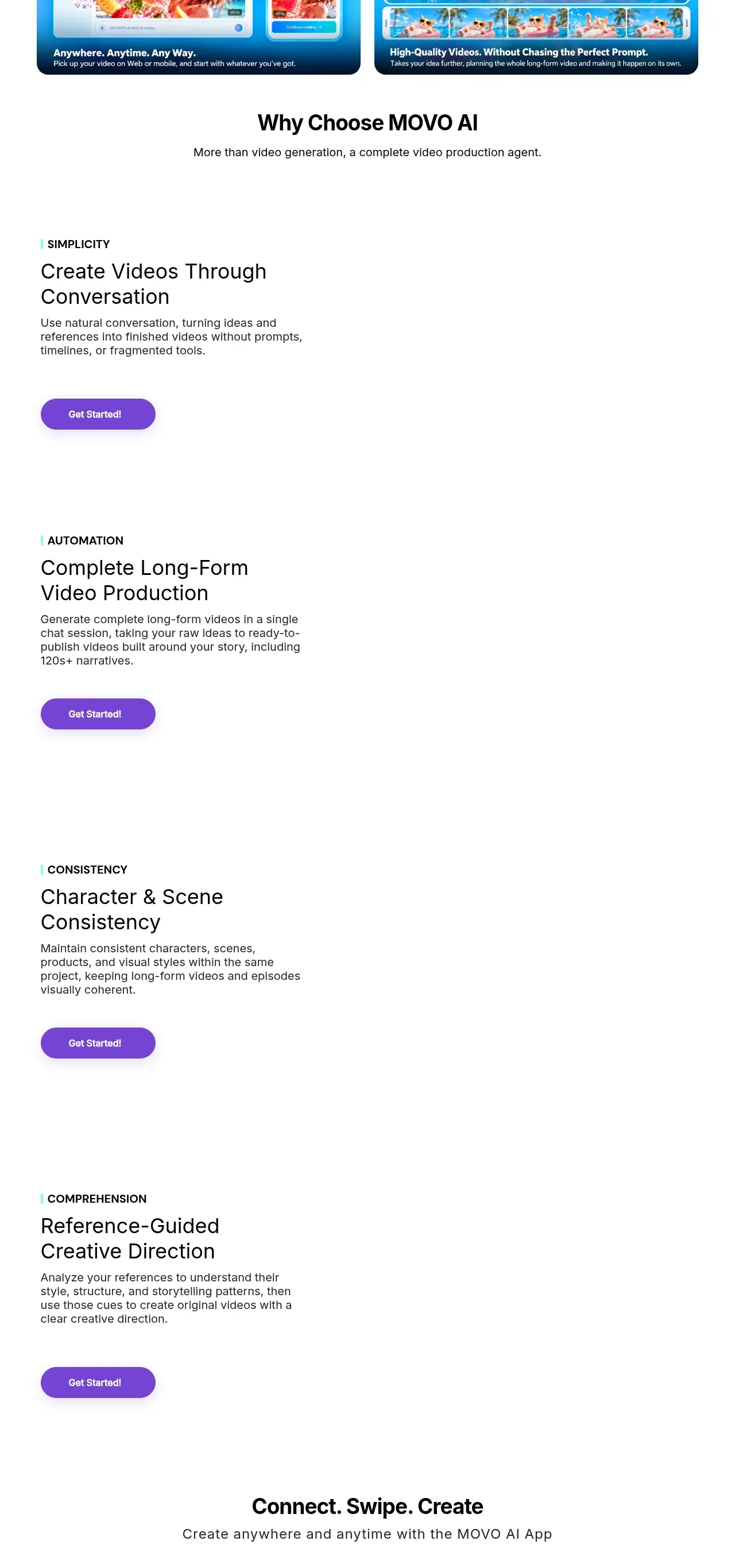
Design analysis
A long benefit sequence turns four core capabilities into spacious, scannable feature panels with repeated labels, headings, descriptions, and CTAs.
Prompt preview
## Reference images

Study these alongside the description below: hierarchy, rhythm, spacing, colour. Build for the product you are asked about, using this design language.

- Component: https://kage-design-assets.t3.tigrisfiles.io/components/movo-ai/8c1aa91f-026c-4018-9b05-6044a1e6f3fb-1792821690-5.webp
- Full page it was cut from: https://kage-design-assets.t3.tigrisfiles.io/screenshots/movo-ai/8c1aa91f-026c-4018-9b05-6044a1e6f3fb-1792821641495-full.webp
- Component on Kage: https://kage.design/component/movo-feature-grid-2

## Before you start
Ask which four capabilities matter most for the user's product, who needs each one, and what action each feature should drive. Use the following layout logic to build an original feature sequence.

Create a section with a centered introductory heading and subtitle, followed by four vertically stacked feature panels. Each panel should have a small uppercase category label with a thin accent marker, a large two-line feature heading, a concise paragraph, and a pill CTA. Alternate or reserve a large visual area on the opposite side for product screenshots, demos, or abstract brand-safe media; preserve intentional whitespace if a visual is not available.

Use a wide max-width container and generous 120–180px vertical spacing per panel. Use 34–42px feature headings, 14–16px body copy, 11–12px uppercase labels with letter spacing, and 14px semibold buttons. Keep the page mostly white with charcoal #101010 text, mint accent #83F0D0, purple CTA #7B3FE4, and a very soft gray divider #F1F1F1. Buttons should have 9999px radius, subtle shadow, and clear hover/focus states.

On mobile, stack the copy and visual, reduce heading sizes, and keep each panel's CTA near its description. Use scroll-reveal only as an enhancement and respect reduced motion.

Never: use the reference's feature names, exact copy, screenshots, product name, logos, or imagery.
More components
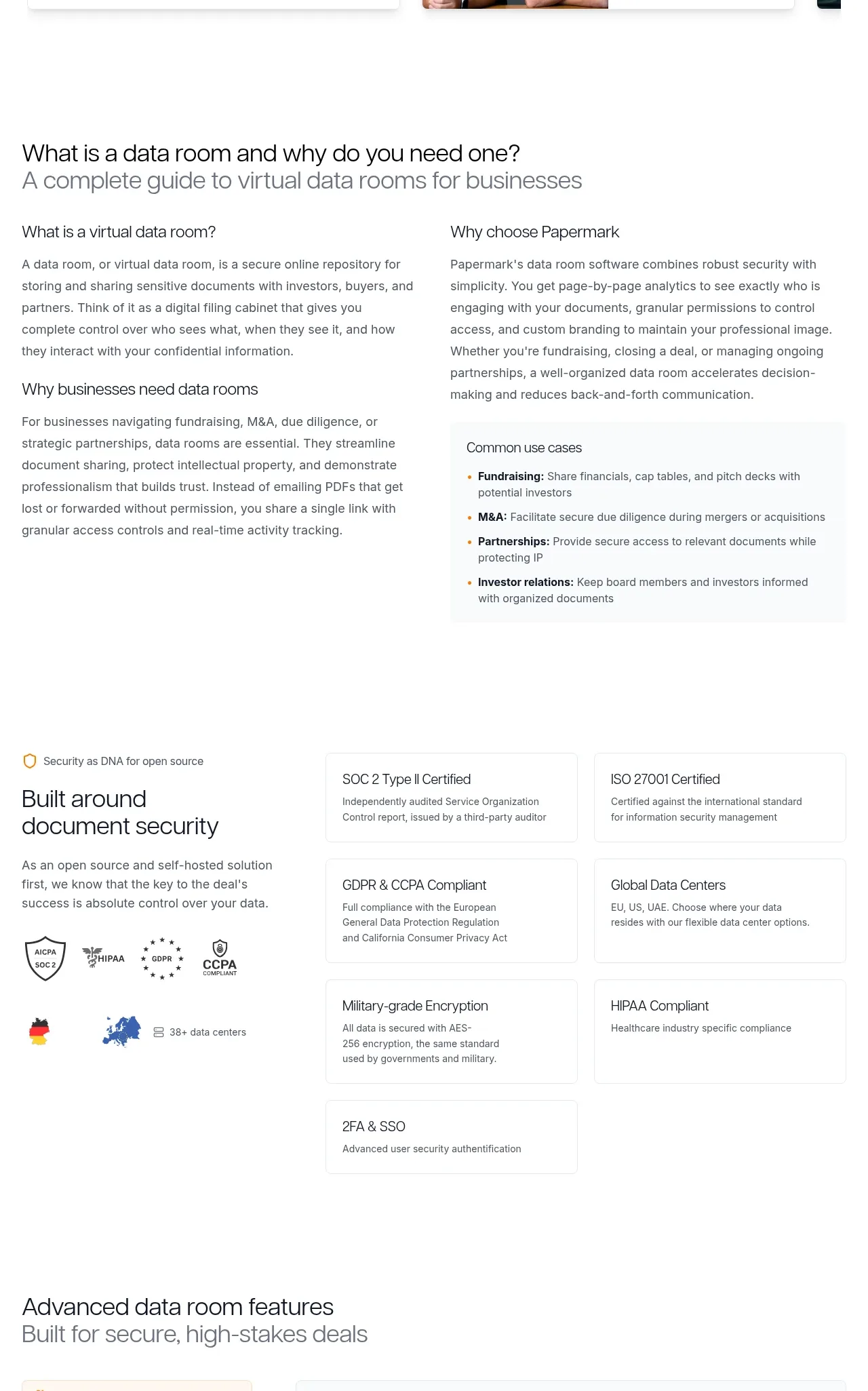
 Data-room education and security overview
Papermark Data Rooms · Feature grid
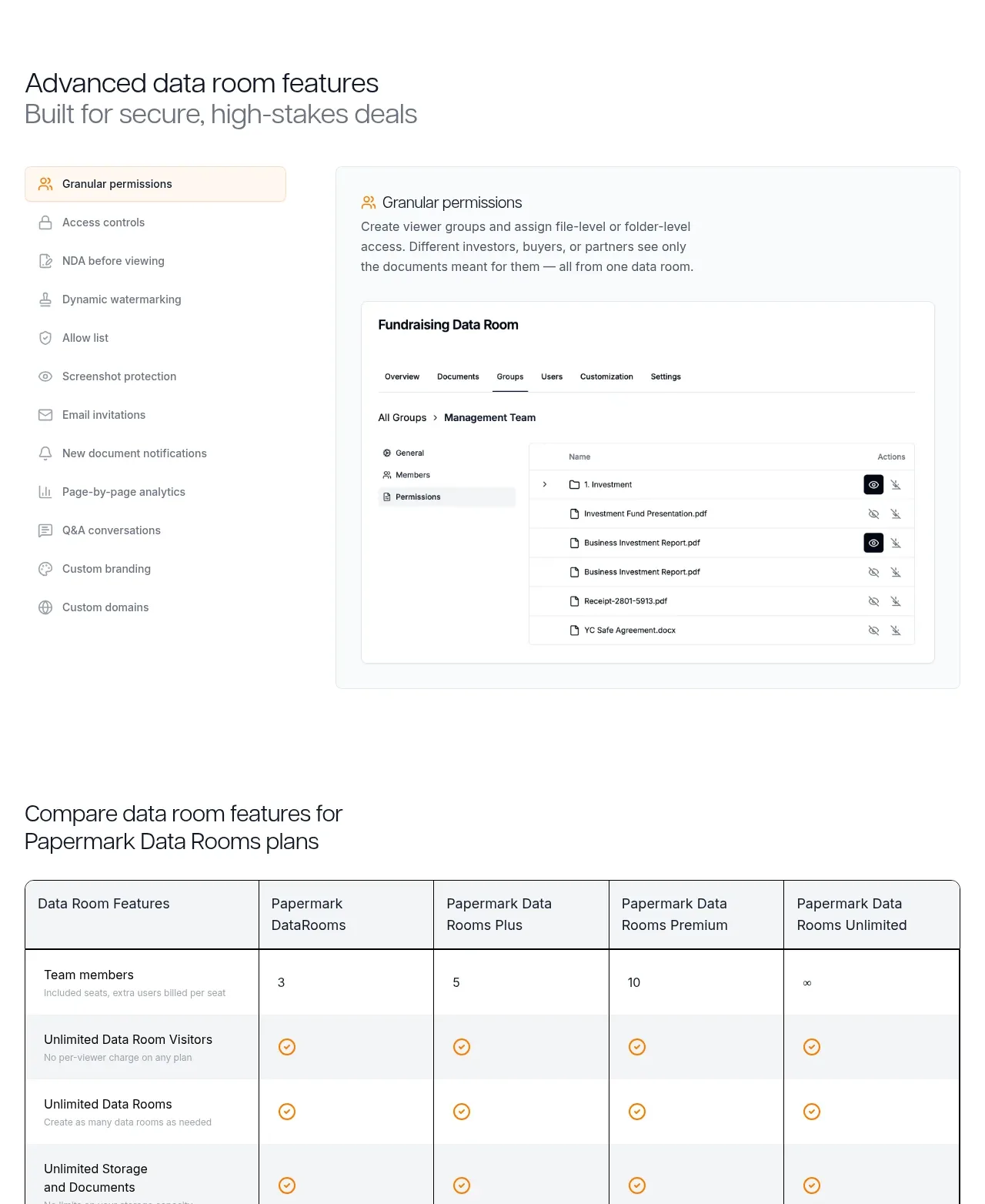 Advanced data-room features
Papermark Data Rooms · Feature grid
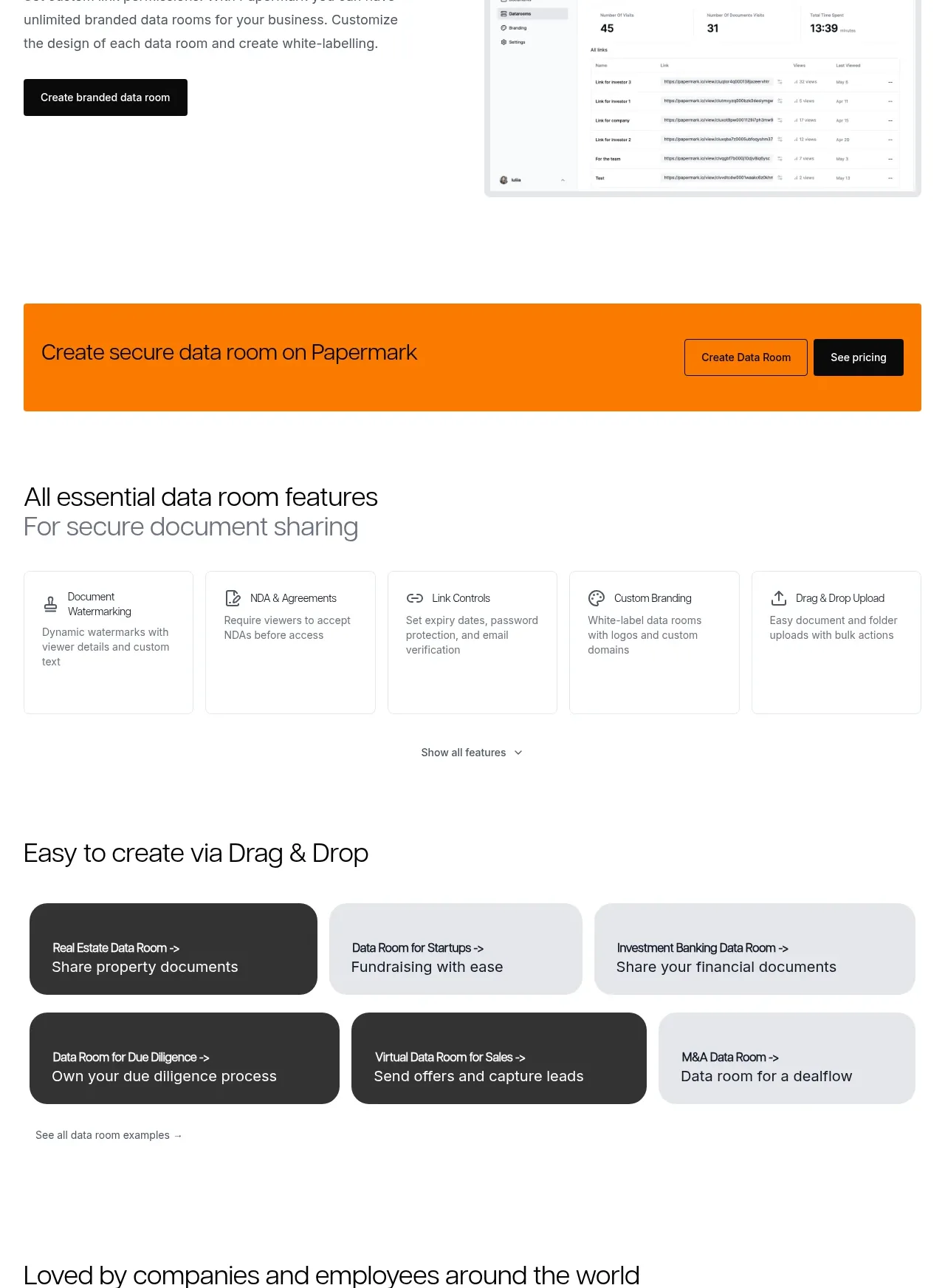 Workflow demonstrations
Papermark Data Rooms · Feature grid
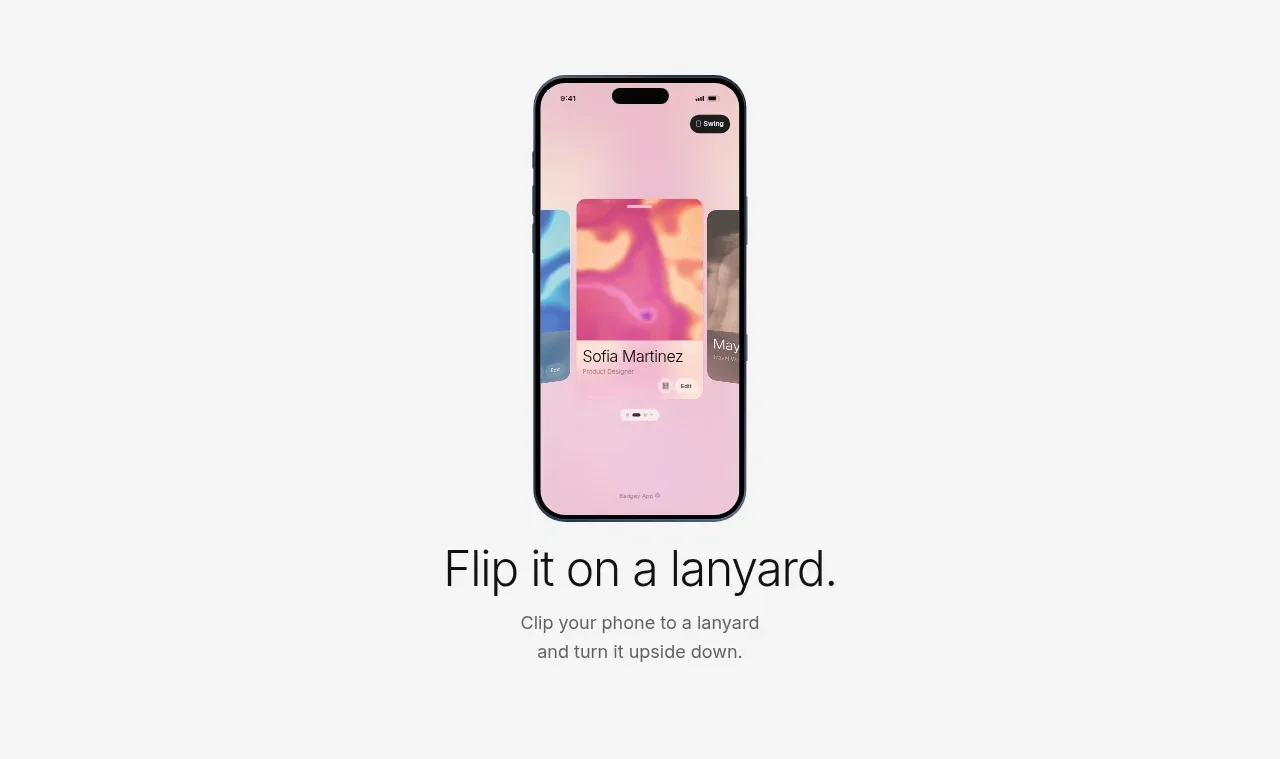
 Lanyard use-case feature
Badgey · Feature grid

 Problem statement
Clips by Plastic · Feature grid
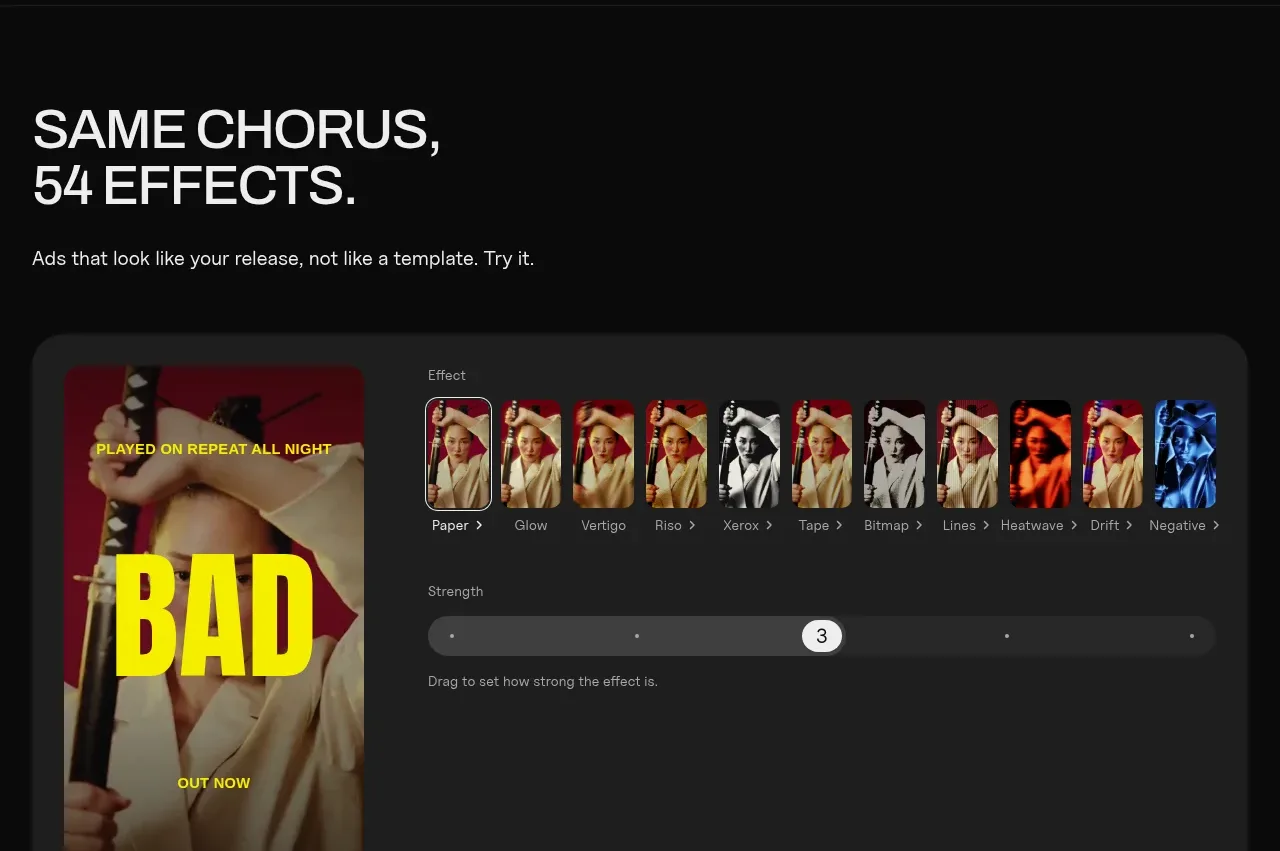 Effects and customization panel
Clips by Plastic · Feature grid