kage
kage
usenarrative.ai
Design analysis
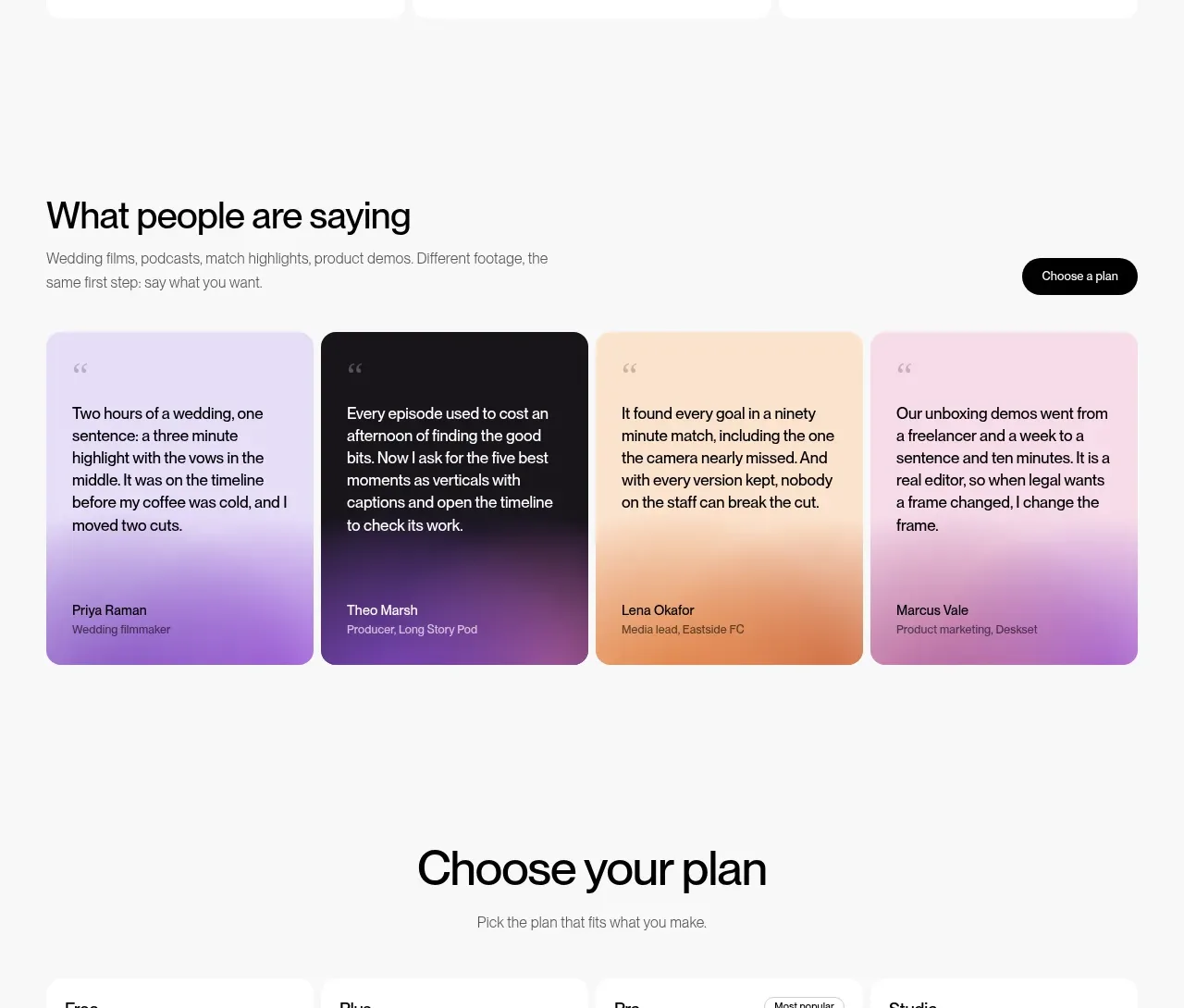
A low-key social-proof introduction leads into four colorful quote cards, each pairing a specific outcome with a named role for credibility.
Prompt preview
## Reference images

Study these alongside the description below: hierarchy, rhythm, spacing, colour. Build for the product you are asked about, using this design language.

- Component: https://kage-design-assets.t3.tigrisfiles.io/components/narrative/6cc395b9-2f9b-4168-8f15-3f16c6d79112-1789538585-4.webp
- Full page it was cut from: https://kage-design-assets.t3.tigrisfiles.io/screenshots/narrative/6cc395b9-2f9b-4168-8f15-3f16c6d79112-1789538531078-full.webp
- Component on Kage: https://kage.design/component/narrative-testimonials

## Before you start
Ask what kinds of customers trust the user's product, what outcomes they achieve, and what tone the brand should have. Use those answers to create authentic original testimonials.

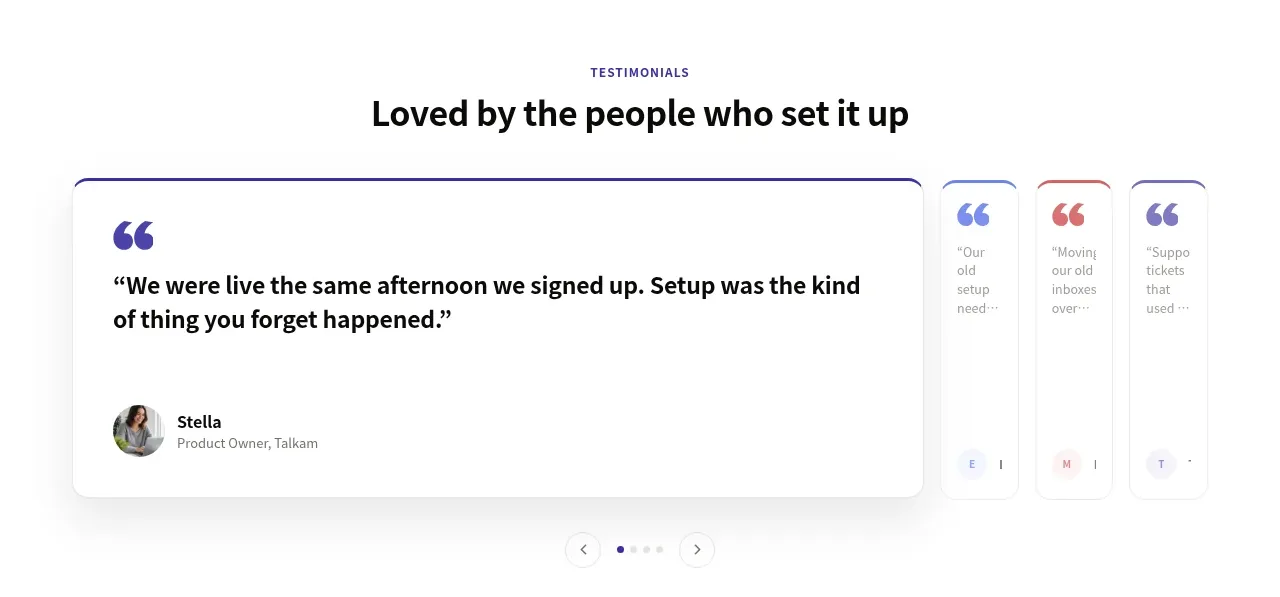
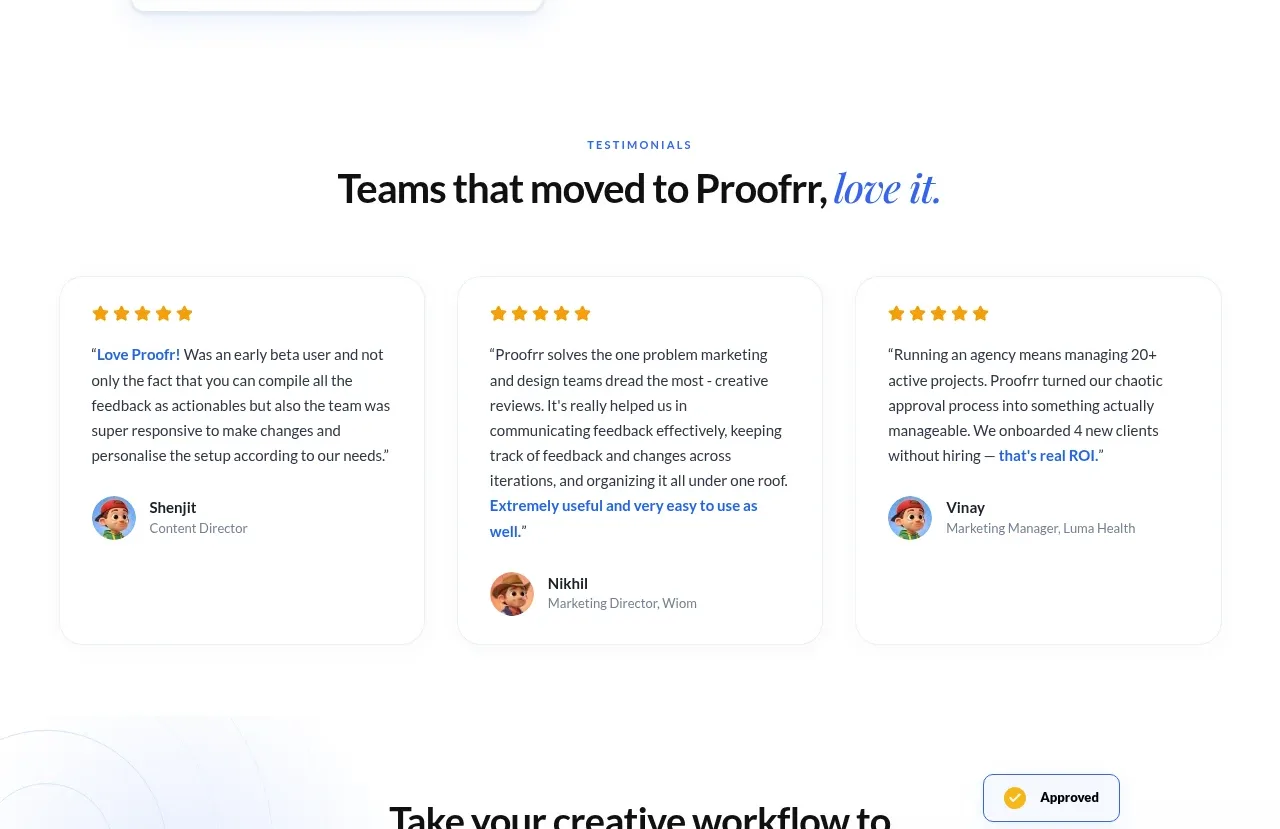
Create a testimonial section with a left-aligned heading and short context paragraph, plus a right-aligned secondary CTA on desktop. Under that, show four equal-width quote cards in one row; each card should include a quotation mark, a specific two-to-four-sentence result, and an author name plus role/company. Give each card a distinct but coordinated soft gradient or tinted background, dark readable text, and 14–16px rounded corners. Use generous card padding, a 30–38px heading, 15–16px quote text, and enough minimum height for consistent bottoms. On mobile, use a horizontal snap carousel or stacked cards with accessible controls.

Never: use the reference's logo, product name, copy, illustrations, imagery, or distinctive branded assets.