 kage
kage
buddy.works

Design analysis
A restrained trust band uses a small uppercase eyebrow and a single horizontal row of monochrome customer marks to add social proof without competing with the hero.
Prompt preview
## Reference images

Study these alongside the description below: hierarchy, rhythm, spacing, colour. Build for the product you are asked about, using this design language.

- Component: https://kage-design-assets.t3.tigrisfiles.io/components/ai-sandboxes-by-buddy/f0e6e8b3-2b0a-4e1e-b3c7-06d5e5447056-1792130829-2.webp
- Full page it was cut from: https://kage-design-assets.t3.tigrisfiles.io/screenshots/ai-sandboxes-by-buddy/f0e6e8b3-2b0a-4e1e-b3c7-06d5e5447056-1792130620611-full.webp
- Component on Kage: https://kage.design/component/ai-sandboxes-by-buddy-logo-cloud

## Before you start
Ask which customers, partners, or credibility signals are appropriate for the user's product and brand. Then implement a flexible trust strip around those inputs.

Build a shallow social-proof section with a centered uppercase eyebrow and a horizontally distributed row of monochrome logo placeholders. Keep the background white, use generous vertical padding, and make the eyebrow small, letter-spaced, and muted (#777D84). Render marks in near-black #17191E at varied widths but aligned to one baseline. Use CSS grid or a responsive horizontal scroller, with enough gap that the strip feels calm rather than crowded. On small screens, allow horizontal scrolling or wrap into two rows.

Never: use the reference's logos, product name, exact customer names, illustrations, or imagery.
More components
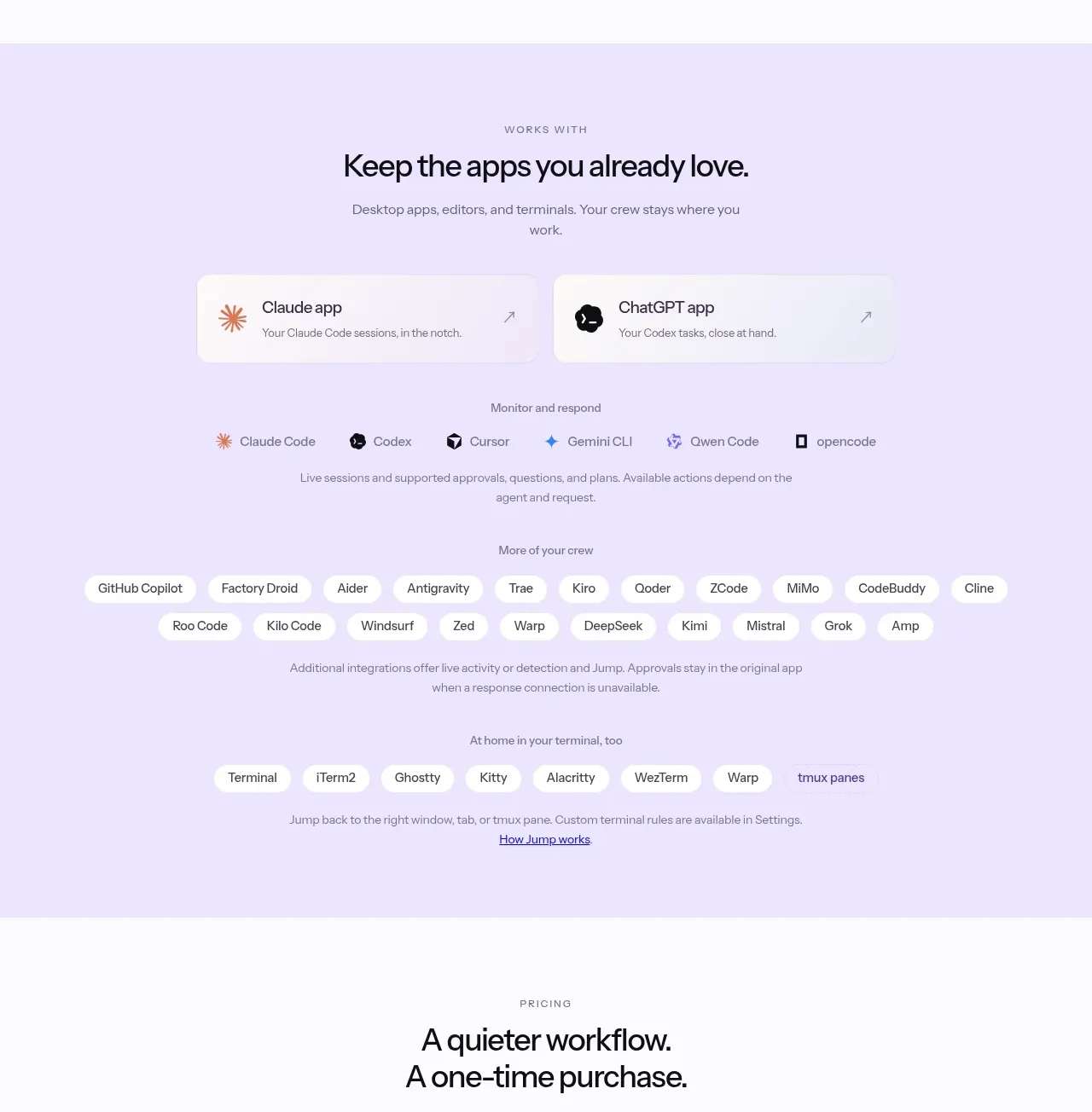
 Supported apps and integrations
CrewTower Mod for Claude Code · Logo cloud
Supported apps and integrations
CrewTower Mod for Claude Code · Logo cloud
 Teams and open-source adoption grid
Ultracite v8 · Logo cloud
Teams and open-source adoption grid
Ultracite v8 · Logo cloud

 Platform compatibility grid
Scalebrowser · Logo cloud
Platform compatibility grid
Scalebrowser · Logo cloud
 Compatible tools grid
Parallax · Logo cloud
Compatible tools grid
Parallax · Logo cloud

 Platform compatibility statement
Navige · Logo cloud
Platform compatibility statement
Navige · Logo cloud
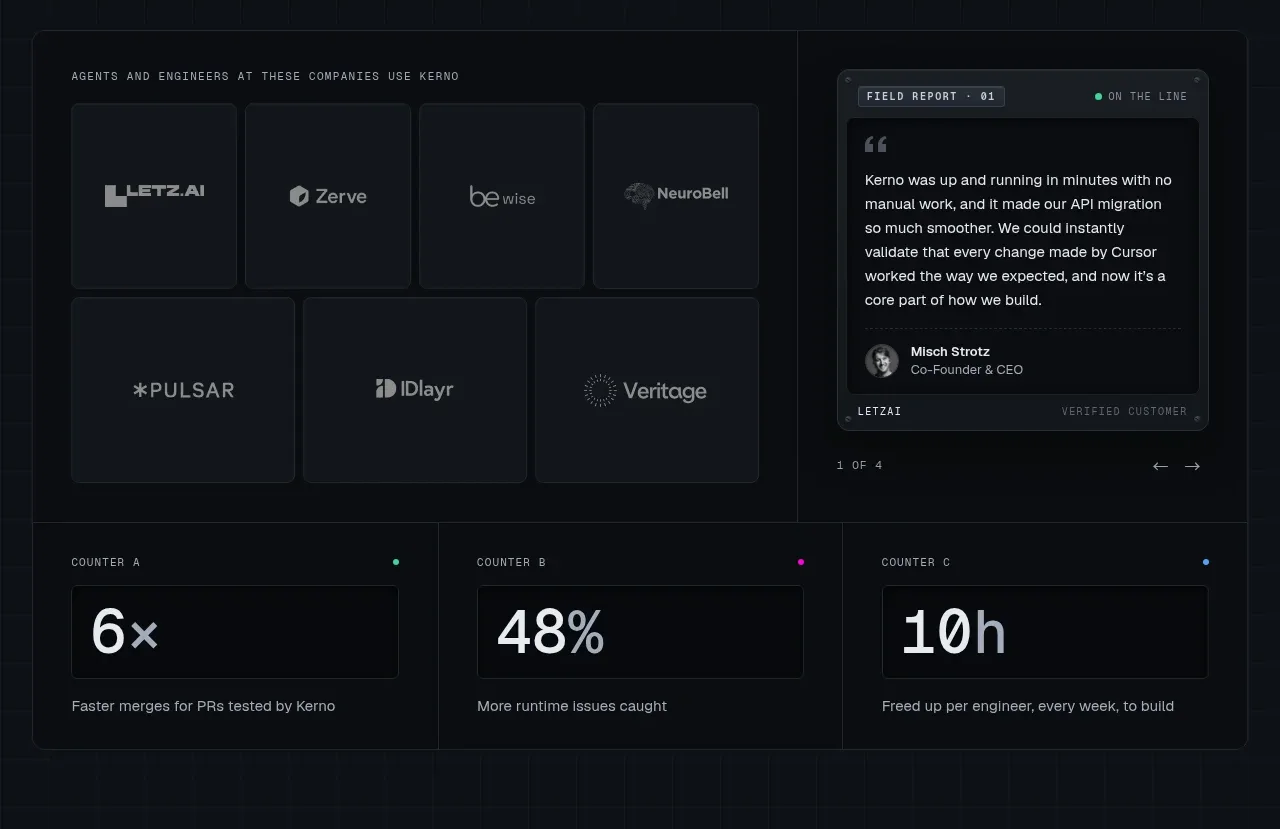
 Customer proof and operating metrics
Kerno 1.0 · Logo cloud
Customer proof and operating metrics
Kerno 1.0 · Logo cloud