kage
kage
polylane.com

Design analysis
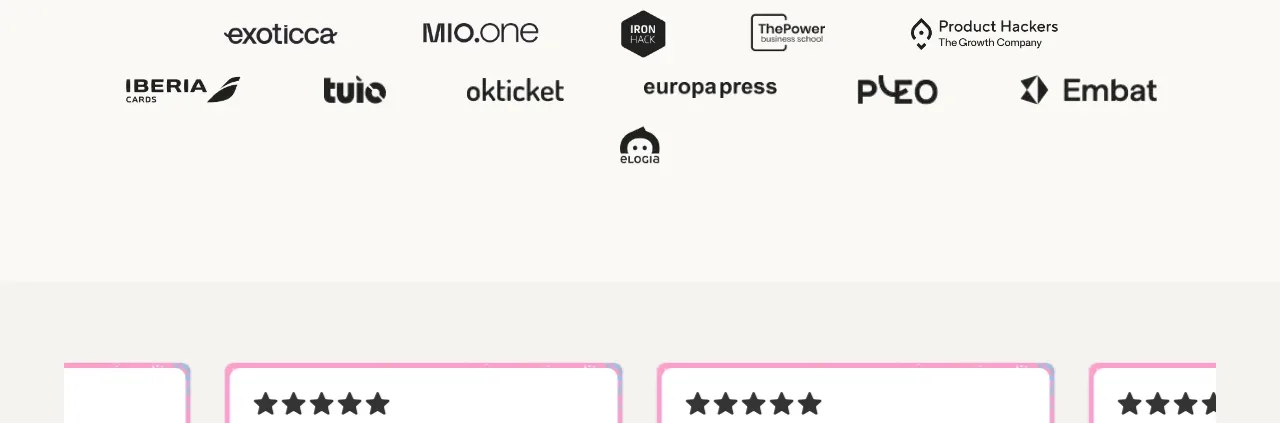
A short trust strip bridges the hero and product story, pairing a plain-language label with a single calm row of monochrome partner marks.
Prompt preview
## Reference images

Study these alongside the description below: hierarchy, rhythm, spacing, colour. Build for the product you are asked about, using this design language.

- Component: https://kage-design-assets.t3.tigrisfiles.io/components/polylane/638c7112-70a9-484e-b85d-ab255c3ac21a-1790920980-2.webp
- Full page it was cut from: https://kage-design-assets.t3.tigrisfiles.io/screenshots/polylane/638c7112-70a9-484e-b85d-ab255c3ac21a-1790920937285-full.webp
- Component on Kage: https://kage.design/component/polylane-logo-cloud

## Before you start
Ask which customer, partner, or ecosystem names the user's product may legitimately display and what level of social proof is appropriate. Build an original trust strip from those inputs.

Create a compact full-width logo cloud on white. Put a small trust statement above a horizontally aligned row of evenly spaced monochrome marks. Keep the strip visually quiet, with consistent logo height, generous gaps, and enough contrast to scan without becoming a focal point. On narrow screens, allow horizontal scrolling or a wrapped two-row layout.

Use #222222 for the label, #555555 or grayscale for marks, white background, and a subtle bottom border #EEEEEE. Set the label around 14–16px and logos around 18–24px high; avoid cards, badges, or decorative effects. Include accessible text alternatives and a reduced-motion-safe hover treatment if logos are interactive.

Never: use logos, product names, copy, illustrations or imagery from the reference.